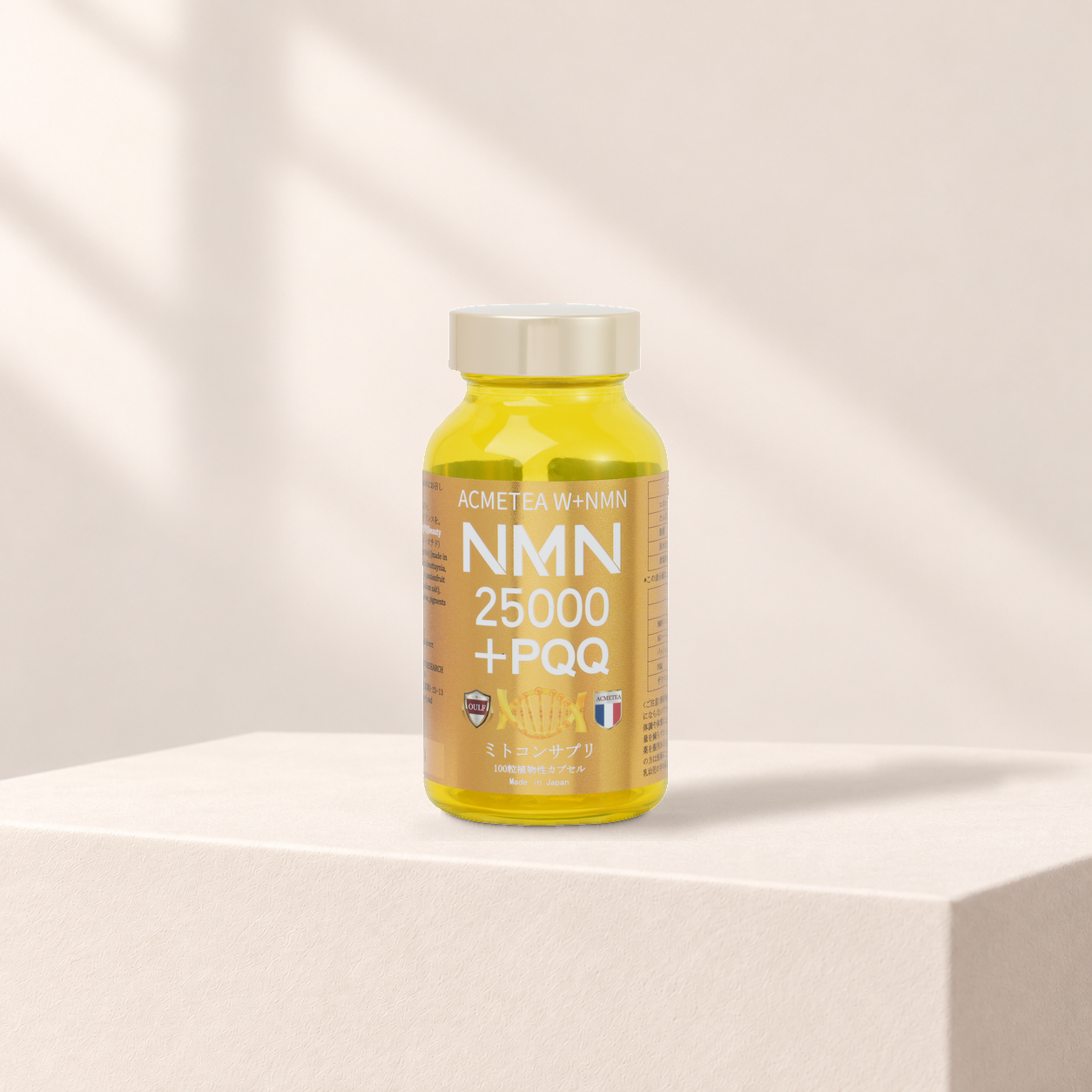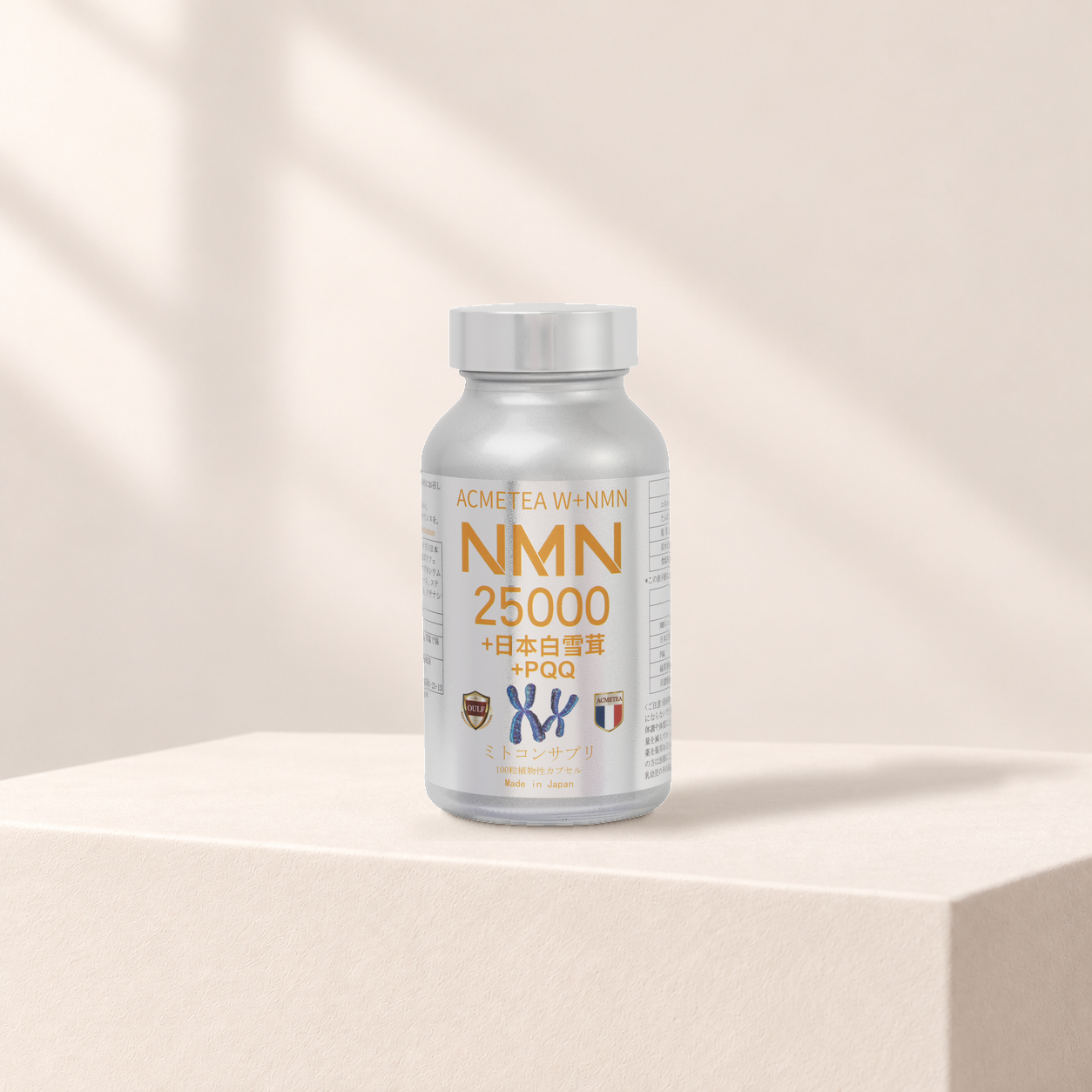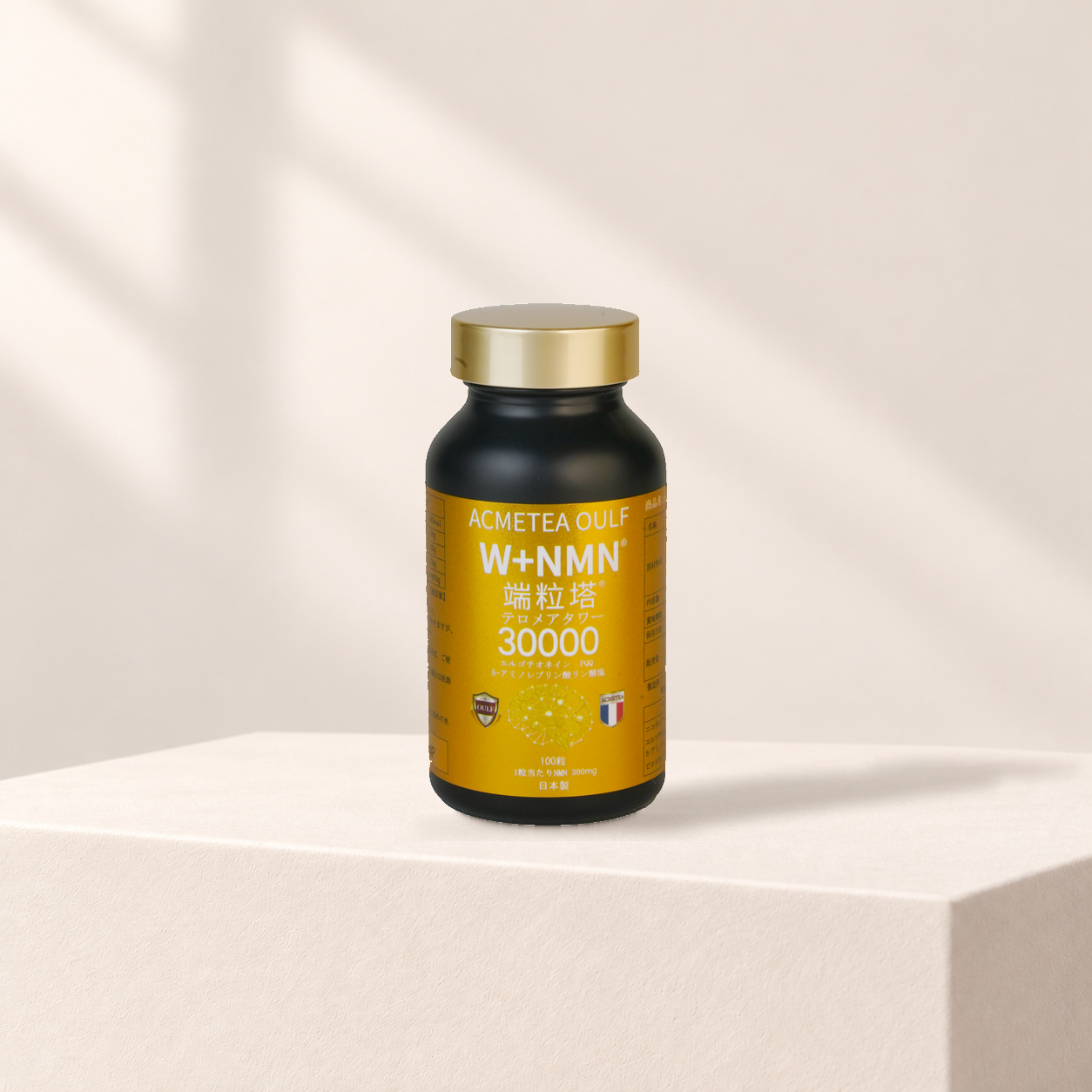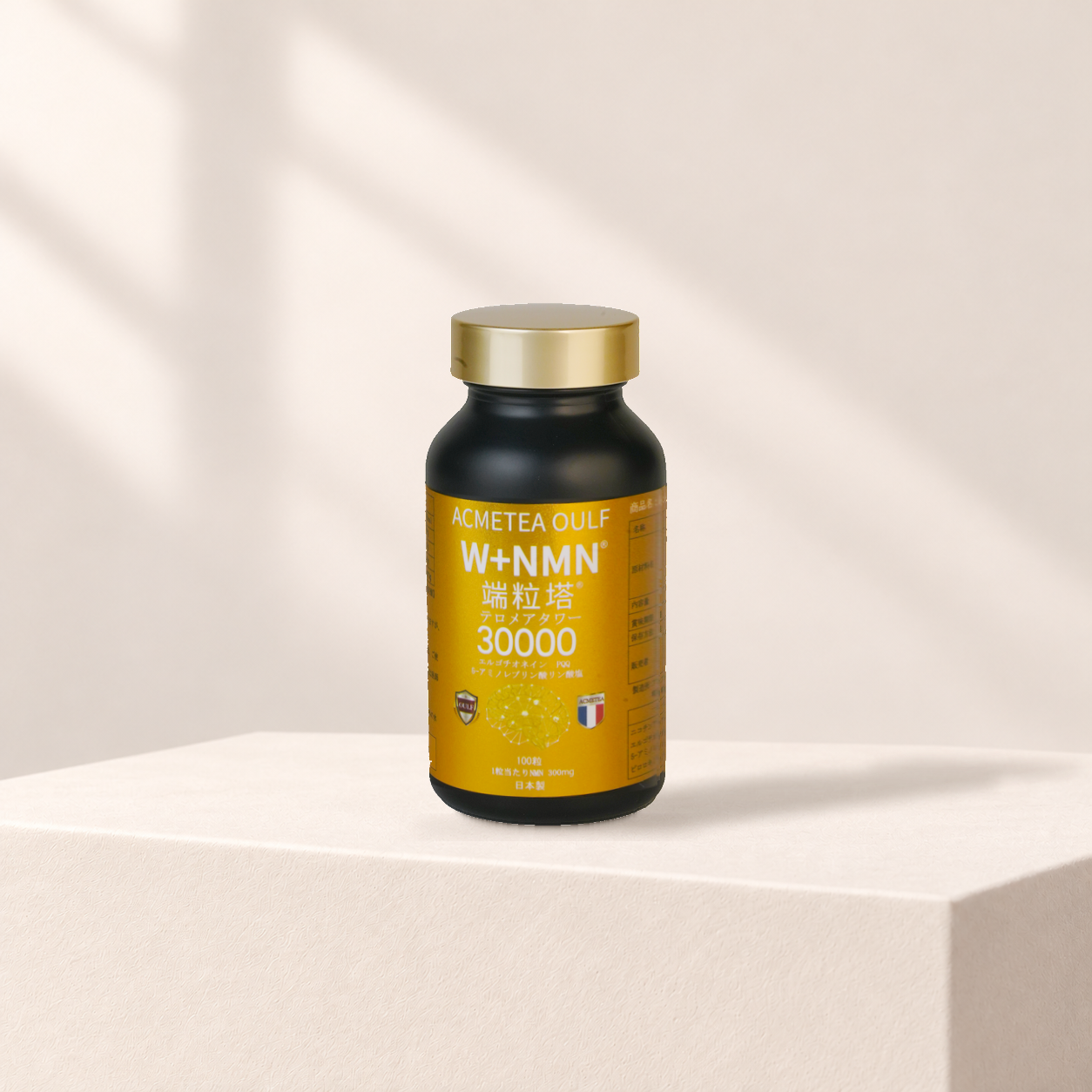
CELLULAR CARE
W+ACME
Beauty nutrition. A broader perspective.
W+ACME extends ACMETEA's skin-focused nutrition story into cellular care. Peptide and rice-ceramide ingredients sit alongside ergothioneine, PQQ and carnosine in a daily beauty ritual.
- Beauty-from-within
- Cellular-care perspective
- 1–2 sachets daily
INGREDIENT SCIENCE, MADE PERSONAL
Beauty nutrition, with cellular depth.
Ergothioneine and PQQ meet AKG and spermidine: four distinctive research perspectives within W+ACME's wider peptide-and-ceramide formula.
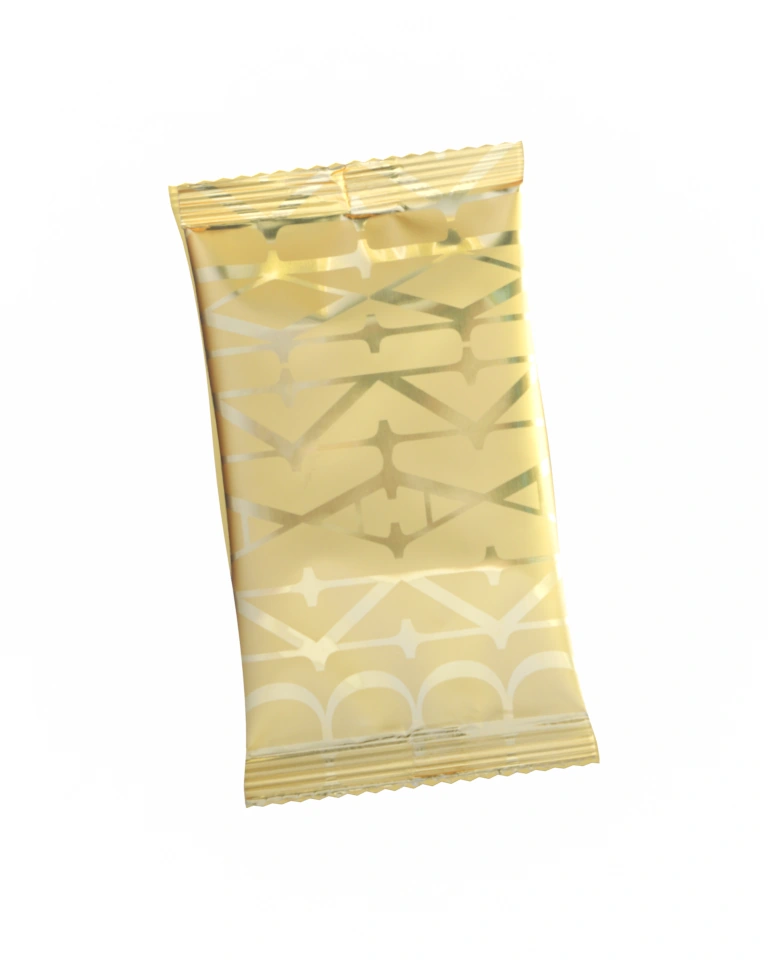
Ergothioneine from EGT Synbio
A distinctive molecule that the body takes up and retains, connecting beauty nutrition with redox biology.
EXPLORE THE INGREDIENT STORY ↗PQQ: a redox perspective
A small molecule investigated in cellular-energy pathways, selected memory measures and skin water loss.
EXPLORE THE INGREDIENT STORY ↗AKG: at metabolism's crossroads
Alpha-ketoglutarate is a normal metabolic intermediate linking energy pathways with amino-acid chemistry.
EXPLORE THE INGREDIENT STORY ↗Spermidine: cellular housekeeping
A naturally occurring polyamine studied in autophagy, the cell's controlled recycling process.
EXPLORE THE INGREDIENT STORY ↗Discover the roles of individual ingredients. Research summaries identify the preparation, population and findings of each study.
INSIDE THE FORMULA
More than
one ingredient.
Understand the ingredients behind W+ACME, one story at a time.
Ingredient & nutrition details ↓Explore the research ↗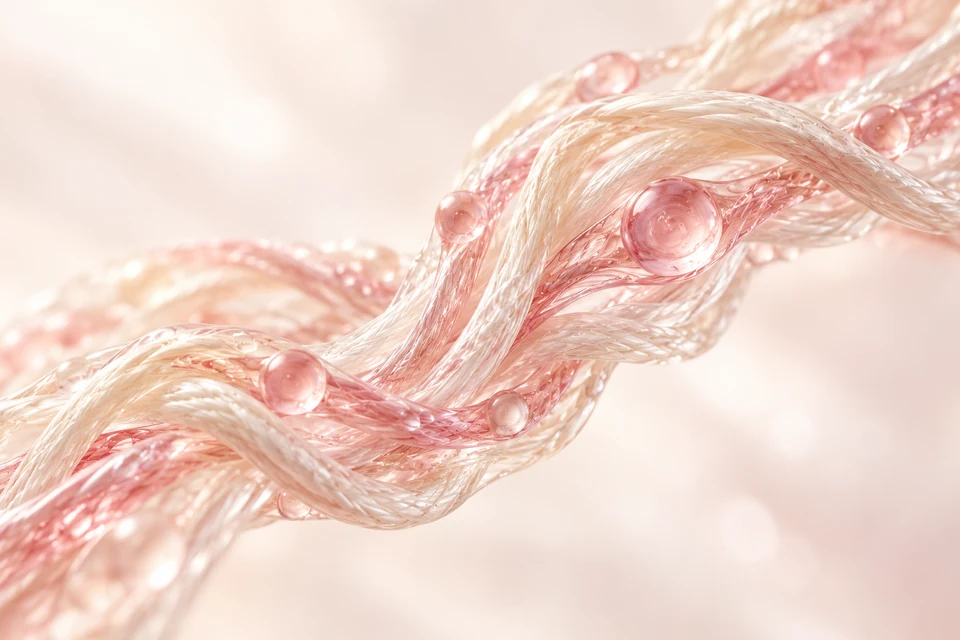
Collagen peptides
Collagen forms part of skin's structural framework. Its smaller peptide building blocks bring this biology into the story of beauty nutrition.
Explore the ingredient
Begin with skin's structure.
A collagen-tripeptide trial explored skin water loss over 12 weeks. Water loss was lower in the climate-adjusted analysis, while the unadjusted comparison and other overall skin measurements were not significantly different. Explore the study for a closer look at this moisture-focused research.
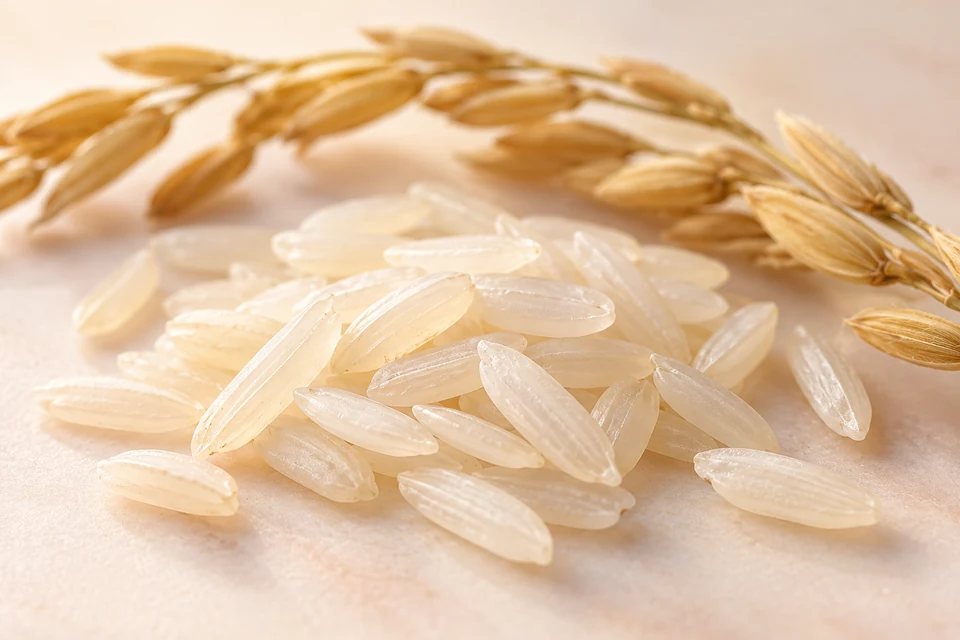
Rice-derived ceramides
Rice extracts can contain glucosylceramides: plant-derived lipids investigated in oral skin-barrier research.
Explore the ingredient
A closer look at moisture.
One controlled study tested a rice extract supplying glucosylceramides in women with dry skin. Less moisture escaped from the cheeks at weeks four and twelve, bringing a measurable moisture-barrier perspective to the ingredient story.
Milk-derived peptides
Casein hydrolysate is a milk-derived ingredient in the formula.
Explore the ingredient
From milk protein to smaller peptides.
Casein is a milk protein. Hydrolysis breaks it into smaller peptides, introducing a different protein ingredient alongside the formula's collagen peptides. Contains milk; unsuitable for a milk-protein allergy.

Salmon-origin DNA-Na
Salmon-origin DNA sodium salt is one of the formula's marine-derived ingredients.
Explore the ingredient
A marine-source ingredient.
This DNA sodium salt ingredient is obtained from salmon milt. Its marine source is relevant when considering dietary preferences and fish allergies.
Ergothioneine
The body absorbs and retains ergothioneine. This distinctive ingredient connects a daily nutrition ritual with the science of cellular redox balance.
Explore the ingredient
Follow the science inside.
The ergothioneine ingredient used in W+ACME is supplied by EGT Synbio. Human studies show uptake into blood. Skin research has also tested an ergothioneine-rich mushroom preparation, although its other constituents mean the results cannot be assigned to ergothioneine alone.

PQQ
PQQ brings another perspective to redox biology, with human studies exploring skin measurements and memory.
Explore the ingredient
Small molecule. Focused questions.
A small dry-skin study found a difference in forearm water loss at week four, while hydration and elasticity were not significantly different. Separate adult research explored selected memory measures. Together, these papers introduce two distinct areas of PQQ research.
Ingredient selection
Peptide ingredients, oligosaccharides, N-acetylcysteine (NAC), AKG, carnosine, casein hydrolysate, elastin peptides, an ergothioneine ingredient, alpha-lipoic acid, SOD, a rice-derived ceramide ingredient, proteoglycans, PQQ, dihydroquercetin and spermidine.
A selection of ingredients. Read your current pack for the complete ingredient list.
Nutrition information
| Nutrient | Amount |
|---|---|
| Energy | 360 kcal |
| Protein | 38.5 g |
| Total fat | 3.2 g |
| Trans fat | 0 g |
| Carbohydrate | 44.3 g |
| Total sugars | 0 g |
| Sodium | 36 mg |
Values per 100 g are not amounts per sachet or per day.

A CONSIDERED DAILY RITUAL
Care that fits
your life.
1–2 sachets per day, in total.
Follow the preparation instructions on your current pack. Do not exceed the recommended daily amount.
Before you begin
Take 1–2 sachets in total daily, following the preparation instructions on your current pack. Do not exceed the recommended daily amount.
Contains milk-derived and fish-derived ingredients. Check the full label and discuss shellfish allergy or other food allergies with a healthcare professional before use.
Ask your clinician before use if you are pregnant, breastfeeding, trying to conceive, preparing for a procedure, taking medicines or managing a medical condition. Not intended for children.
Do not automatically combine several ACMETEA formulas or add NMN capsules. A pharmacist or clinician should review overlapping ingredients and total intake.
Food supplements do not replace a balanced diet, a healthy lifestyle or medical care.
Pack size & storage
208 g per box; 16 sachets × 13 g.
Store tightly sealed in a cool, dry place. Do not refrigerate, to avoid condensation.
Shelf life: 24 months; use-by date: see box.
CELLULAR CARE
Find your longer-term perspective.
W+ACME for a broader beauty-nutrition approach. OULF for women's healthy-ageing interests. DNA NMN for a men's cellular-care perspective.
YOUR CARE PERSPECTIVE
W+ACME
Beyond a skin-only perspective.
Ergothioneine and PQQ meet AKG and spermidine: four distinctive research perspectives within W+ACME's wider peptide-and-ceramide formula.
Ergothioneine from EGT Synbio
A distinctive molecule that the body takes up and retains, connecting beauty nutrition with redox biology.
Why this ingredient
W+ACME uses EGT Synbio ergothioneine. Human uptake research follows its passage into blood; separate skin studies investigate an ergothioneine-rich mushroom preparation. These are different research questions, explored in the ingredient guide.
PQQ: a redox perspective
A small molecule investigated in cellular-energy pathways, selected memory measures and skin water loss.
Why this ingredient
PQQ research spans laboratory mitochondrial signalling and controlled human studies of memory and skin water loss. These complementary questions bring detail to the formula's cellular-care perspective.
AKG: at metabolism's crossroads
Alpha-ketoglutarate is a normal metabolic intermediate linking energy pathways with amino-acid chemistry.
Why this ingredient
Its biochemical role has inspired research on ageing in model organisms and early human studies. The useful story starts with what AKG does in normal biology, then separates animal findings from human measurements.
Spermidine: cellular housekeeping
A naturally occurring polyamine studied in autophagy, the cell's controlled recycling process.
Why this ingredient
Spermidine adds a cellular-maintenance perspective to W+ACME. Its research follows the biology of autophagy, dietary patterns and human cognition, three distinct ways to explore this naturally occurring polyamine.
Care context & ingredient research
Skin moisture and structure remain the starting point. W+ACME broadens the conversation to ingredients investigated in cellular biology, without reducing healthy ageing to a single ingredient.
Explore peptide and plant-lipid research, then read the human studies of ergothioneine and PQQ. The ingredient, dose and population determine what each finding can tell us.
Rice-derived ceramides
A plant-lipid ingredient studied through facial water-loss measurements.
Read the research ↗Ergothioneine
Human research tracks how this ingredient is absorbed and retained in the body.
Read the research ↗The research collection spans skin measurements, ingredient uptake and cellular biomarkers. Open each source for its preparation, study population and findings.
How do I introduce W+ACME into my routine?
Start by checking the full ingredient information and your current supplements with a healthcare professional. Follow the brand's total daily sachet directions and avoid automatically combining several formulas.
Which ingredients shape W+ACME's wider perspective?
Collagen peptides and rice-derived ceramides introduce skin structure and moisture. Ergothioneine, PQQ and carnosine extend the ingredient story into cellular biology, absorption and selected human research measurements.
Before you begin
Follow the sachet directions and the safety guidance in Your routine. Keep to 1–2 sachets in total daily and seek professional advice before combining formulas.
A FEW THINGS TO KNOW
Questions,
answered.
How is W+ACME different from DermaShield?
DermaShield centres on skin-focused nutrition around aesthetic care. W+ACME takes that beauty-from-within philosophy into a broader cellular-care story, including ergothioneine, PQQ and carnosine alongside peptide and rice-ceramide ingredients.
What does healthy ageing mean here?
It means taking a longer-term view of everyday care: consistent nourishment, movement, rest and curiosity about the science of cellular biology. W+ACME brings that perspective into a daily beauty-nutrition ritual.
Where can I read the evidence?
Open the ingredient-research summaries to see who was studied, the preparation and dose, the findings and the original publication. Each ingredient card links directly to the relevant paper.
Should I take W+ACME and DermaShield together?
Ask a healthcare professional to review both complete ingredient lists and your total daily intake before combining formulas. Keep to the recommended daily amount and account for overlapping ingredients.
SCIENCE, WITH CONTEXT
Go a little deeper.
Explore the ingredient research behind the collection. Each source introduces the people studied, the preparation used and the full findings.
For your daily amount, follow the product directions in Your routine.
Randomized, placebo-controlled oral ingredient trial · 2021Collagen tripeptides and skin water loss
Randomized, placebo-controlled oral ingredient trial · 2021Rice glucosylceramides and facial water loss
Randomized, placebo-controlled human uptake study · 2017How oral ergothioneine is absorbed and retained
Randomized, placebo-controlled oral ingredient trial · 2024An ergothioneine-rich mushroom preparation and women's skin
Randomized, placebo-controlled oral ingredient trial · 2015PQQ and dry-skin measurements in women
Biomarker analysis within a randomized, placebo-controlled trial · 2024Oral carnosine and its distribution in the body
Randomized, placebo-controlled oral ingredient trial · 2023PQQ and selected memory measures in adults
INGREDIENT INNOVATION
A closer look at
the technology.
Explore published patent documents relating to selected ingredients in this formula.
Patent documents describe inventions and their scope. Human ingredient studies are presented separately in the research section.
Lactium® · milk-derived peptidesFrom milk protein to a defined peptideEP0714910B1 · Historical patent · 1999
Lactium® is a milk-protein hydrolysate developed by Ingredia. Its research history includes the identification of a ten-amino-acid fragment of alpha-s1 casein, known as alpha-casozepine. This foundational patent describes that peptide and hydrolysates containing it.
- Named applicant
- S.C.A. Laitière d’Artois et des Flandres
European grant published in 1999, presented as a historical ingredient-technology reference.
READ THE PATENT DOCUMENTORYZA CERAMIDE · rice-derived lipidsRice lipids and ceramide biologyJP6723737B2 · Supplier research reference
In its research on rice-derived lipids, Oryza examined beta-sitosterol glucoside in relation to a gene involved in the skin’s ceramide pathway. The patent describes this ingredient-level work in a cultured human epidermal model.
- Named applicant
- Oryza Oil & Fat Chemical Co., Ltd.
Supplier research reference for the rice-derived ORYZA CERAMIDE ingredient family.
READ THE PATENT DOCUMENTTHE INGREDIENT JOURNAL
A little more understanding.
What is ergothioneine?
Meet ergothioneine: its dietary origins, human uptake research and emerging place in the skin-nutrition conversation.
READ ARTICLE ↗
What is PQQ? Redox chemistry, mitochondria and human research
Understand PQQ through its cellular biology, small human skin studies, memory trials and the differences between ingredient forms.
READ ARTICLE ↗
What is AKG? Metabolism, ageing research and biological-age tests
A practical guide to alpha-ketoglutarate, calcium-AKG studies and the difference between metabolic biology and an ageing claim.
READ ARTICLE ↗
What is spermidine? Autophagy, food and human evidence
Explore spermidine's polyamine identity, the meaning of autophagy and what a year-long randomised human trial actually found.
READ ARTICLE ↗