Ingredient library
The names behind the formulas.
Explore ingredients through the questions they help us understand: skin structure, moisture, cellular metabolism and essential nutrition. This library introduces the materials and research; each product page provides the composition of its own formula.

Skin structure
Peptides and the collagen conversation.
Structural proteins and the nutrients involved in their normal production are related parts of the beauty-nutrition story.

- 01
Collagen peptides
Collagen peptides are fragments derived from collagen protein. Researchers have examined defined oral preparations using skin measurements such as hydration and elasticity. A randomised trial published in 2021 investigated a collagen tripeptide preparation over 12 weeks, including transepidermal water loss as an outcome.
Collagen tripeptide trial · Tak et al., Frontiers in Medicine, 2021
- 02
Vitamin C
Vitamin C is a water-soluble vitamin required for collagen biosynthesis. It also functions as an antioxidant and supports non-haem iron absorption. Its established physiological roles help explain why vitamin C is discussed in both beauty nutrition and broader dietary education.
- 03
Protein identity
Peptide profile and source are useful details when comparing protein preparations. The general name describes the category; the more specific preparation identifies the material. Product ingredient information and the methods of a research paper provide different parts of this picture.
Skin moisture
A closer look at barrier-related ingredients.
Hydration and the movement of water through the skin are connected, but researchers measure them in different ways.
- 01
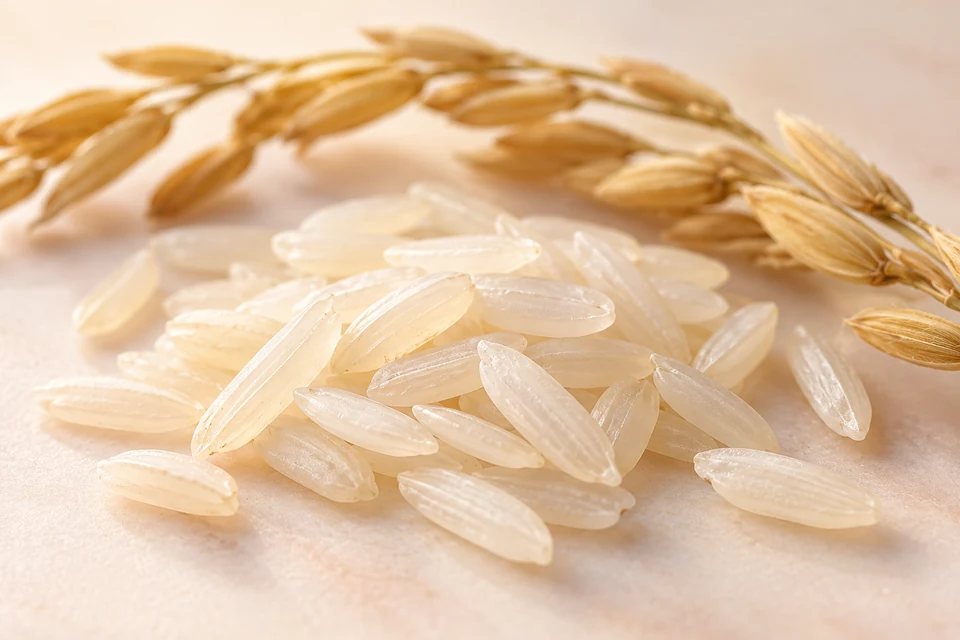
Rice-derived glucosylceramides
Glucosylceramides are a class of lipids. A placebo-controlled trial in 44 women with dry skin examined a rice-derived preparation for 12 weeks and reported a difference in cheek water loss at selected time points. The study is a useful example of oral barrier-related ingredient research.
Rice-derived glucosylceramide trial · Functional Foods in Health and Disease, 2021
- 02
PQQ and skin research
A small human trial investigated 20 mg of PQQ daily over eight weeks, including water-loss measurements on the forearm. This is a particular skin-study context for an ingredient also discussed in redox research; the measurement and study design are part of the finding.
- 03
Reading skin measurements
Hydration describes water content measured at the skin surface; transepidermal water loss describes water passing through the skin. Elasticity is another measurement again. Keeping these terms distinct makes an ingredient discussion more informative than a general promise of better skin.
Cellular research
Three ingredients, different scientific questions.
NMN, ergothioneine and PQQ appear in cellular-wellbeing conversations, but their identities and research programmes are distinct.
- 01
Nicotinamide mononucleotide
NMN is involved in NAD+ biosynthesis. A 2021 trial studied 250 mg daily for ten weeks in 25 postmenopausal women with prediabetes, reporting an effect on muscle insulin sensitivity. The participant group and metabolic outcome define the scope of this research.
NMN and muscle insulin sensitivity · Yoshino et al., Science, 2021
- 02
Ergothioneine
Ergothioneine is a dietary compound investigated for its uptake, distribution and redox-related biology. Human supplementation research has measured increased blood concentrations and retention, helping describe how the body handles this material.
- 03
Pyrroloquinoline quinone
PQQ is a redox-active compound. Product labels may identify a particular form, such as PQQ disodium salt. That full name matters when reading a formula, while the specific research preparation and amount matter when following a study.
Foundational nutrition
Familiar nutrients, important roles.
Vitamins and minerals have established physiological functions that provide a useful foundation for life-stage nutrition discussions.
- 01
Iron
Iron forms part of haemoglobin and myoglobin, connecting it with oxygen transport and muscle physiology. Dietary needs and iron status vary. A discussion about iron supplementation is most useful when it takes the individual's diet and relevant clinical information into account.
- 02
Folate
Folate is the general term for vitamin B9 compounds. It participates in reactions involved in DNA and RNA synthesis and normal cell division. Folic acid and other folate forms have different names; the exact form on the label gives a more precise description.
- 03
Ingredients in context
A formula can bring several materials together, each with a different role in the nutrition conversation. The ingredient list, serving information and personal circumstances help you decide which questions to discuss with an appropriate healthcare professional.
A closer look
Your questions, answered.
How do I find which of these ingredients is in my product?
Open the exact product or main collection page and go to Ingredients. This library explains ingredient categories; the formula section identifies the materials listed for that product.
What is the difference between an extract and a named constituent?
An extract is a preparation containing one or more compounds from a source material. A named constituent is a specific component within it. Their quantities are different unless the product information explicitly states otherwise.
How can I read more about a study?
Follow the reference linked to the ingredient. The original publication provides the preparation, participants, study duration and measurements behind the short explanation.
Read further
References & further reading.
- Collagen tripeptide trial · Tak et al., Frontiers in Medicine, 2021
- Vitamin C · NIH Office of Dietary Supplements
- Rice-derived glucosylceramide trial · Functional Foods in Health and Disease, 2021
- PQQ and skin measurements · Nakano et al., 2015
- NMN and muscle insulin sensitivity · Yoshino et al., Science, 2021
- Ergothioneine uptake in humans · Cheah et al., 2017
- Iron · NIH Office of Dietary Supplements
- Folate · NIH Office of Dietary Supplements