What is NMN? A guide to NAD+ and cellular nutrition
NMN stands for nicotinamide mononucleotide, a molecule involved in the body's production of NAD+. NAD+ participates in energy metabolism and other cellular processes. Human NMN studies have explored blood NAD+ and selected metabolic measurements over defined periods.
Two related names, two different molecules
NMN and NAD+ often appear side by side, which can make them seem interchangeable. Think of NMN as an intermediate in a biochemical pathway and NAD+ as a coenzyme used in many cellular reactions. The relationship explains why researchers study NMN, but it is still useful to keep the names distinct when reading a label or comparing a paper with a product.
Cellular nutrition becomes easier to understand when it begins at this level: identify the molecule, identify its role, then ask what researchers actually measured. That sequence is more informative than beginning with a general promise about age. It also gives you a practical way to navigate an unfamiliar ingredient without needing a background in biochemistry.

What researchers have measured in people
In a 2022 trial, Okabe and colleagues assigned 30 healthy adults to 250 mg of NMN daily or placebo for twelve weeks. Whole-blood NAD+ increased in the NMN group. Neither group reported serious adverse events. One NMN participant experienced abdominal pain that resolved spontaneously after thirty minutes.
A separate ten-week trial by Yoshino and colleagues studied 25 postmenopausal women with prediabetes who were overweight or obese. At 250 mg daily, NMN improved a measure of muscle insulin sensitivity. These are different study populations and different outcomes. Together, they help explain why current discussions should name the measurement rather than reducing all results to one broad anti-ageing statement.

A result is more useful with its context
A blood measurement answers a question about the blood sample. A muscle insulin-sensitivity assessment answers a question about a particular metabolic response. A person's experience of energy, the appearance of skin and long-term health outcomes are additional questions. Keeping them separate makes the science clearer, rather than less interesting.
Duration matters as well. Ten or twelve weeks can be useful for studying a defined change, but it is a different timescale from years of everyday use. When you encounter a headline, look for the daily amount, the participants and the study length. Those three details are often enough to turn a vague impression into a more accurate understanding.
Read the amount per day, not only per bottle
Front-of-pack numbers may describe the NMN contained across the entire bottle. The serving information explains how that total translates into a daily routine. For example, a bottle containing 100 capsules at 250 mg each contains 25,000 mg in total. A two-capsule serving provides 500 mg. The arithmetic connects the two numbers without confusing their purposes.
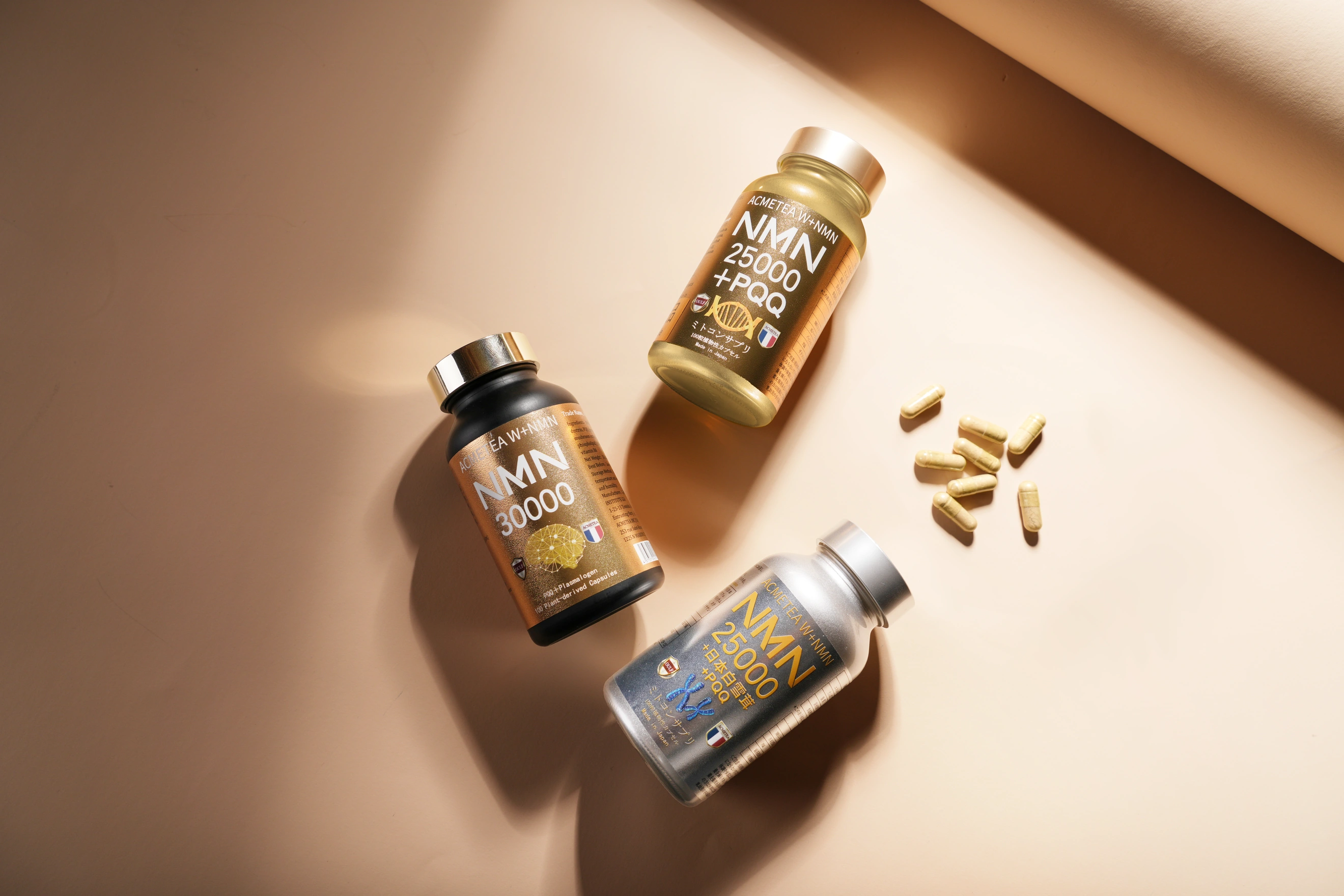
ACMETEA W+NMN Gold and Platinum list 250 mg of NMN per capsule. Black Gold lists 300 mg per capsule. Their two-capsule daily servings therefore provide 500 mg, 500 mg and 600 mg respectively. The accompanying ingredients also differ, so the product pages are the best place to compare the complete formulas.

Find the right level of detail for your routine
Start by identifying the exact W+NMN edition, then read its full ingredient list and directions. Keep that information with any other supplements or medicines you use, especially if you plan to discuss them with a clinician. A comparison based only on the largest front-label number misses the distinctions between a bottle total, a daily serving and the rest of the formula.
Within ACMETEA, W+NMN is a separate capsule family from the sachet-based cellular-care collection. Browse the collections by format as well as by interest. A clear, repeatable routine begins with understanding which product is in front of you and how its own instructions fit your day.

Your questions, answered.
Is NMN a form of NAD+?

NMN is a distinct molecule involved in NAD+ biosynthesis. A paper about NMN supplementation should be read as an NMN study, even when its main measurement is the resulting concentration of NAD+.
Does a 30,000 mg bottle mean a 30,000 mg daily serving?
No. For W+NMN Black Gold, the bottle total comes from 100 capsules containing 300 mg NMN each. The labelled two-capsule daily serving provides 600 mg NMN.
Where should I start when comparing editions?
Compare the daily serving, every accompanying ingredient and the product-specific directions. The dose-reading guide below explains how to keep those label details separate from the amount tested in a particular study.
Explore the sources.
- Randomized human trial · Frontiers in NutritionOkabe et al. (2022) — Oral NMN and blood NAD+
- Randomized human trial · ScienceYoshino et al. (2021) — NMN and muscle insulin sensitivity