NMN amounts, explained: capsule, serving and study
To interpret an NMN amount, first ask what it describes: one capsule, a daily serving, the whole bottle or a research intervention. Then compare the complete formula and the study context. A larger number alone does not establish a more suitable routine.

The three numbers on a bottle
A bottle total, a capsule amount and a daily serving are different views of the same product. A total helps describe the quantity in the pack. The amount per capsule tells you what each unit contains. The daily directions tell you how those units are intended to be used. Start with this distinction before comparing editions or relating a product to a paper.
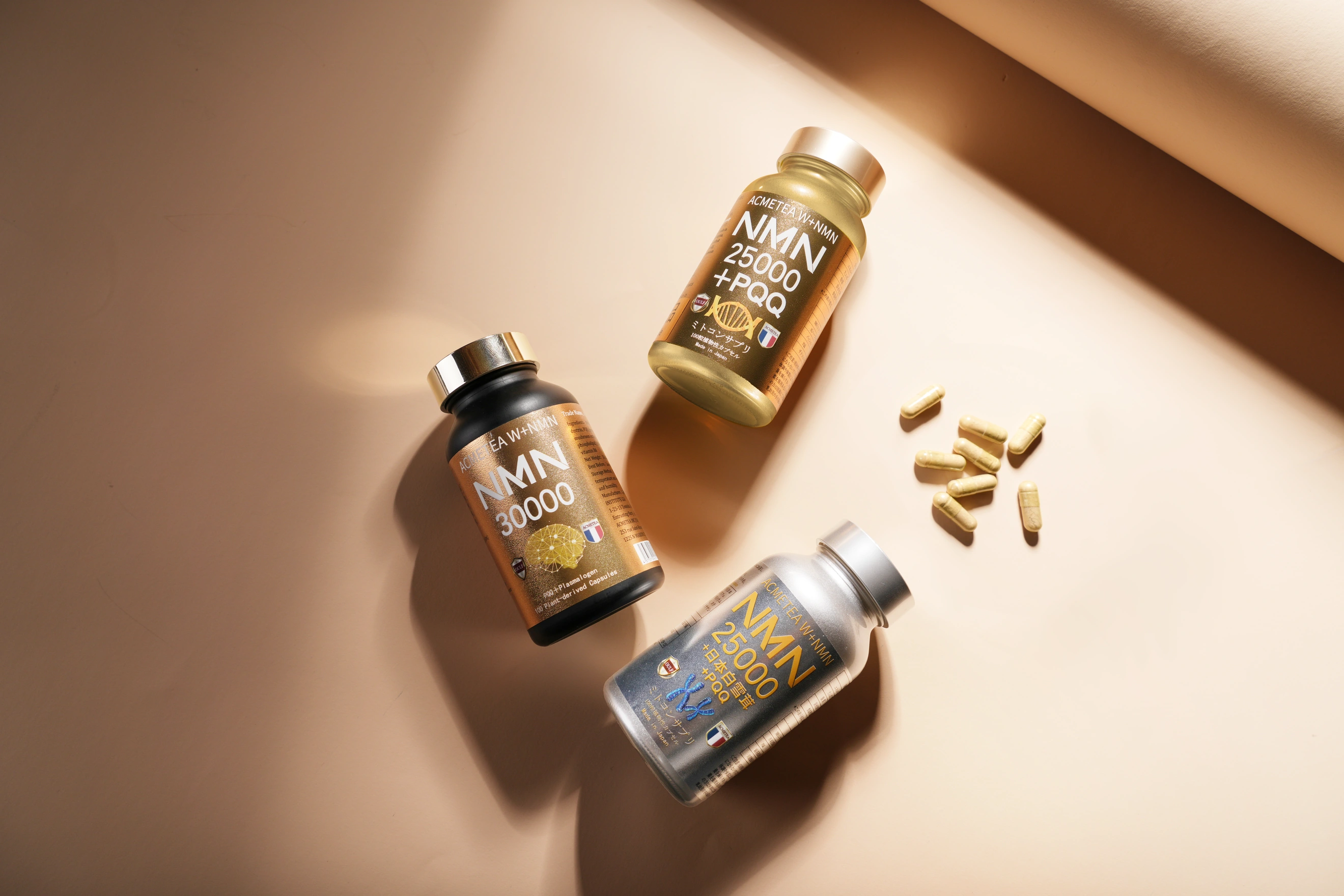
For W+NMN Gold and Platinum, 100 capsules at 250 mg NMN each give a bottle total of 25,000 mg. Their two-capsule daily servings provide 500 mg NMN. Black Gold contains 300 mg per capsule, giving 30,000 mg per 100-capsule bottle and 600 mg per two-capsule daily serving. Keeping the units beside the number prevents a large front-label figure from becoming a confusing daily amount.
A study amount belongs to a study question
In the Okabe trial, healthy adults received 250 mg NMN daily for twelve weeks, with blood NAD+ among the measurements. In the Yoshino trial, 250 mg daily over ten weeks was studied in women with prediabetes, with a focus on metabolic function. The same daily amount appeared in two different research settings.
That is why reading only the milligrams is incomplete. Add the participants, preparation, duration and outcome to the amount. You then have a concise description of the experiment rather than a general target to copy. A research protocol is designed around its own question and monitoring arrangements.

Compare the ingredients around NMN
The W+NMN editions differ in more than colour and bottle total. Gold includes a botanical blend, passionfruit seed extract, PQQ and pomegranate. Platinum includes white snow mushroom material, PQQ, green tea extract and a shell-derived calcium material. Black Gold combines NMN with ergothioneine, 5-ALA phosphate and PQQ disodium salt. Each formula therefore deserves its own reading.
When comparing them, use the stated names carefully. Green tea extract is a prepared botanical material, not a declaration that its full weight is EGCG. Likewise, the weight of a calcium-containing material is different from the amount of elemental calcium it supplies. These distinctions can be small in print but large in meaning.

Build the routine from the label outward
Choose the exact edition first, read its daily directions, and check what else is already in your routine. Taking several products can create overlapping ingredients even when the packaging looks quite different. A short list of every supplement and its daily serving makes those overlaps much easier to spot than trying to remember them individually.
If your circumstances include medication, a medical condition, pregnancy or breastfeeding, take that list to a qualified clinician before adding a new formula. Keep the product label available rather than relying on a general description such as a longevity supplement. The more precise the information you bring, the more useful the conversation can be.

Further reading
NIH Office of Dietary Supplements — Background InformationRead the result with the same care as the dose
When reviewing a study, make a small reading card: ingredient, daily amount, participants, duration and outcome. Add the result in one sentence using the name of the measurement. For example, a change in a laboratory marker should stay attached to that marker rather than becoming an undefined statement that everything improved.
This habit is especially helpful when comparing articles from different years. Different studies may ask different questions even if their titles use similar language. A clear reading card lets you see whether they build on one another or simply describe different aspects of the same ingredient. You can then return to the product page with a more grounded understanding of what you are comparing.

Your questions, answered.
Should I increase my serving to match a study?

Use the directions for your specific product. A study amount belongs to its own formulation, participants and monitoring plan. Discuss any change with a qualified clinician rather than changing the serving to copy a number.
Is the Black Gold bottle total a daily amount?
The 30,000 mg figure describes NMN across 100 capsules. The two-capsule daily serving contains 600 mg NMN, alongside the other ingredients listed for that edition.
What is the fastest useful comparison?
Place the two daily-serving panels beside one another, then compare NMN and every accompanying ingredient. Only after that should you compare the research attached to those ingredients.
Explore the sources.
- Randomized human trial · Frontiers in NutritionOkabe et al. (2022) — Oral NMN and blood NAD+
- Randomized human trial · ScienceYoshino et al. (2021) — NMN and muscle insulin sensitivity
- Official consumer referenceNIH Office of Dietary Supplements — Background Information