Psyllium fibre: water, the gut and how to read a study
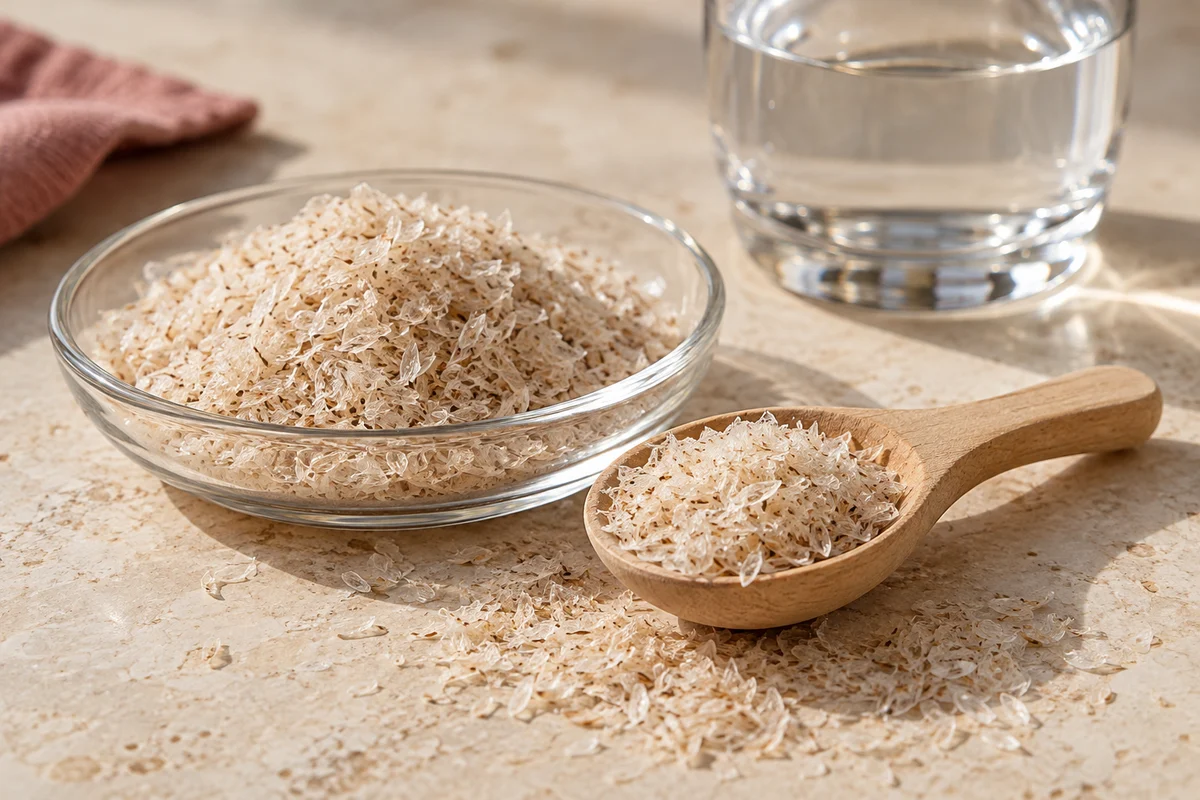
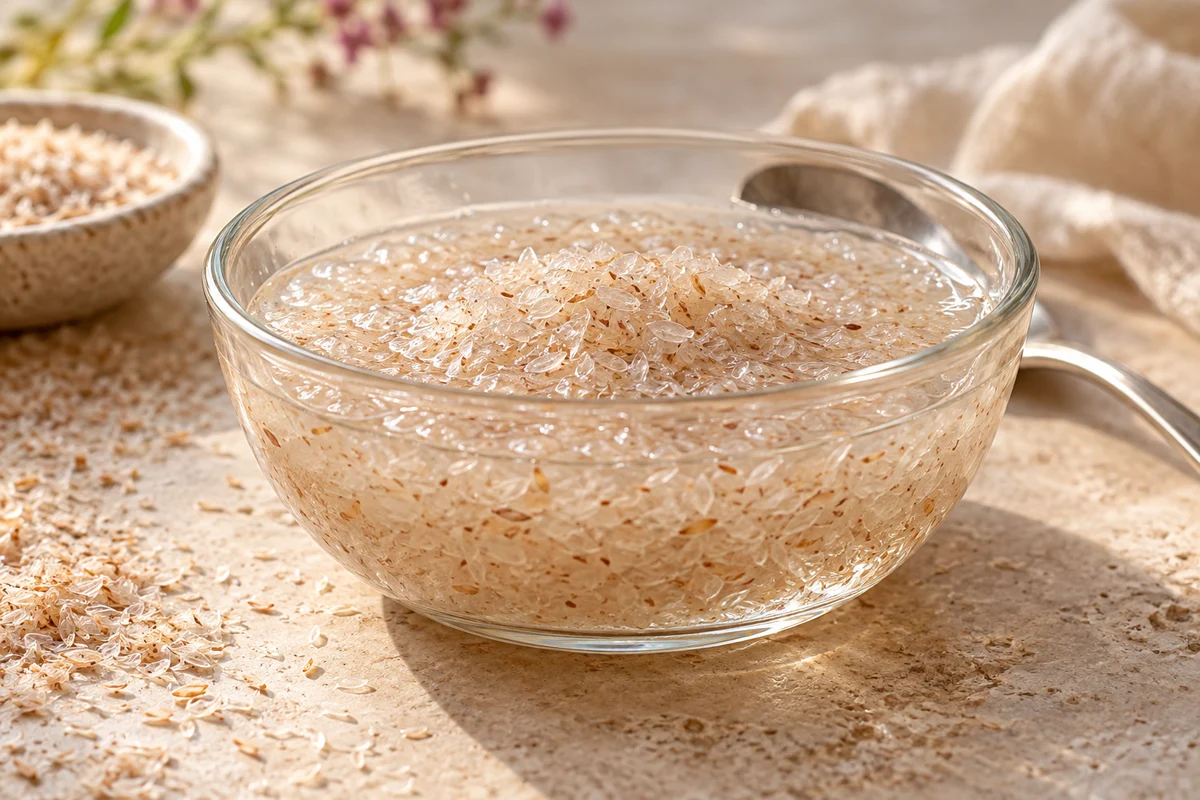
Psyllium is a plant-derived fibre ingredient. Research often studies its seed husk, which holds water and forms a gel. That physical behaviour helps explain interest in stool consistency and bowel function. Findings depend on the preparation, dose, fluid intake and people studied, rather than the ingredient name alone.
A fibre's physical behaviour matters
Fibre is not a single substance with one uniform effect. Some fibres dissolve readily, some form viscous gels, and some are more extensively fermented by gut microbes. Psyllium husk is particularly interesting for its water-holding behaviour. A gel can change the distribution and retention of water within intestinal contents, which is different from simply adding bulk. This is why stool consistency, stool water and transit are useful research measurements. An ingredient's physical properties provide a plausible mechanism, but the clinical outcome still needs to be tested at a defined intake.
Further reading
Jalanka et al. (2019): psyllium, stool water and microbiotaA short study examined stool water and microbes
A 2019 publication reported two small randomised, double-blind, placebo-controlled studies involving eight healthy volunteers and 16 people with constipation. Seven-day psyllium-husk interventions were compared with maltodextrin placebo, with stool-water and microbiota measurements. Changes were more apparent in the constipation group. The study is useful because it looks beyond a general statement that fibre is good for the gut and measures specific physical and microbial responses. Its small size and short duration, however, make it unsuitable for predicting long-term outcomes in every person or every fibre-containing blend.
Further reading
Jalanka et al. (2019): psyllium, stool water and microbiotaA larger trial did not outperform placebo
Another 2019 randomised trial assigned 172 adults with functional constipation to psyllium, lactitol, their combination or placebo for four weeks. The psyllium dose was 3.5 g daily. Bowel-movement frequency and other clinical measures improved across the groups, but the active interventions were not superior to placebo on the main clinical measures. This does not erase the ingredient's physical properties. It shows why a plausible mechanism is not enough to predict the result of a particular regimen. Dose, study population, expectations and the chosen outcome can all affect interpretation.
Further reading
Cheng et al. (2019): psyllium and lactitol trialPsyllium, FOS and konjac are different ingredients
Acme Magic includes psyllium, fructooligosaccharides and konjac alongside peptide and micronutrient ingredients. These names should not be collapsed into one undifferentiated fibre claim. Fructooligosaccharides are short carbohydrate chains, while konjac is associated with a different polysaccharide profile. Their weights cannot be added together and treated as the dose of psyllium husk tested in a trial. The product's psyllium entry also should not be silently converted into a particular research-grade husk specification. A complete formula offers a composition to understand, not automatic equivalence to a single-ingredient intervention.

Water and swallowing safety are essential
Concentrated psyllium preparations need sufficient liquid because their swelling is part of how they behave. Follow the directions for the exact product rather than swallowing a dry fibre powder or borrowing another product's fluid instructions. The US National Library of Medicine advises discussing swallowing difficulty, intestinal blockage and relevant medicines before medicinal psyllium use. Fibre can affect the timing or absorption of some medicines, so a pharmacist can advise on separation where necessary. Persistent bowel changes, pain or bleeding deserve medical attention rather than repeated attempts to solve the problem by adding supplements.
Further reading
MedlinePlus: medicinal psyllium precautionsA daytime formula is still a complete formula
Acme Magic's daytime positioning is a way to organise its brand ritual, not evidence of a time-specific bowel effect. Its full composition matters, including ingredients unrelated to fibre. In particular, the formula contains snow lotus culture and must not be used during pregnancy; breastfeeding and other sensitive situations need professional guidance. Do not assume that a familiar fibre ingredient makes the entire product suitable for everyone. For everyday nutrition, evaluate the whole diet, the total supplement routine and the actual preparation directions together. That is more useful than focusing on one attractive ingredient name.
Your questions, answered.
Can I use a study's psyllium dose as the dose for Acme Magic?

No. A multi-ingredient sachet is not the same preparation as a measured dose of psyllium husk.
Does more fibre always mean a better result?
No. Type, dose, fluid intake, tolerance and medical context all matter.
Explore the sources.
- Small controlled human studiesJalanka et al. (2019): psyllium, stool water and microbiota
- Randomised human trialCheng et al. (2019): psyllium and lactitol trial
- Official patient informationMedlinePlus: medicinal psyllium precautions