Passion fruit seed extract: piceatannol and skin-moisture research
Passion fruit seeds contain polyphenols, including piceatannol, that have attracted laboratory and human skin research. A small trial tested a piceatannol-rich seed preparation for skin moisture. The seed extract, its piceatannol content and the familiar fruit juice are three different things.
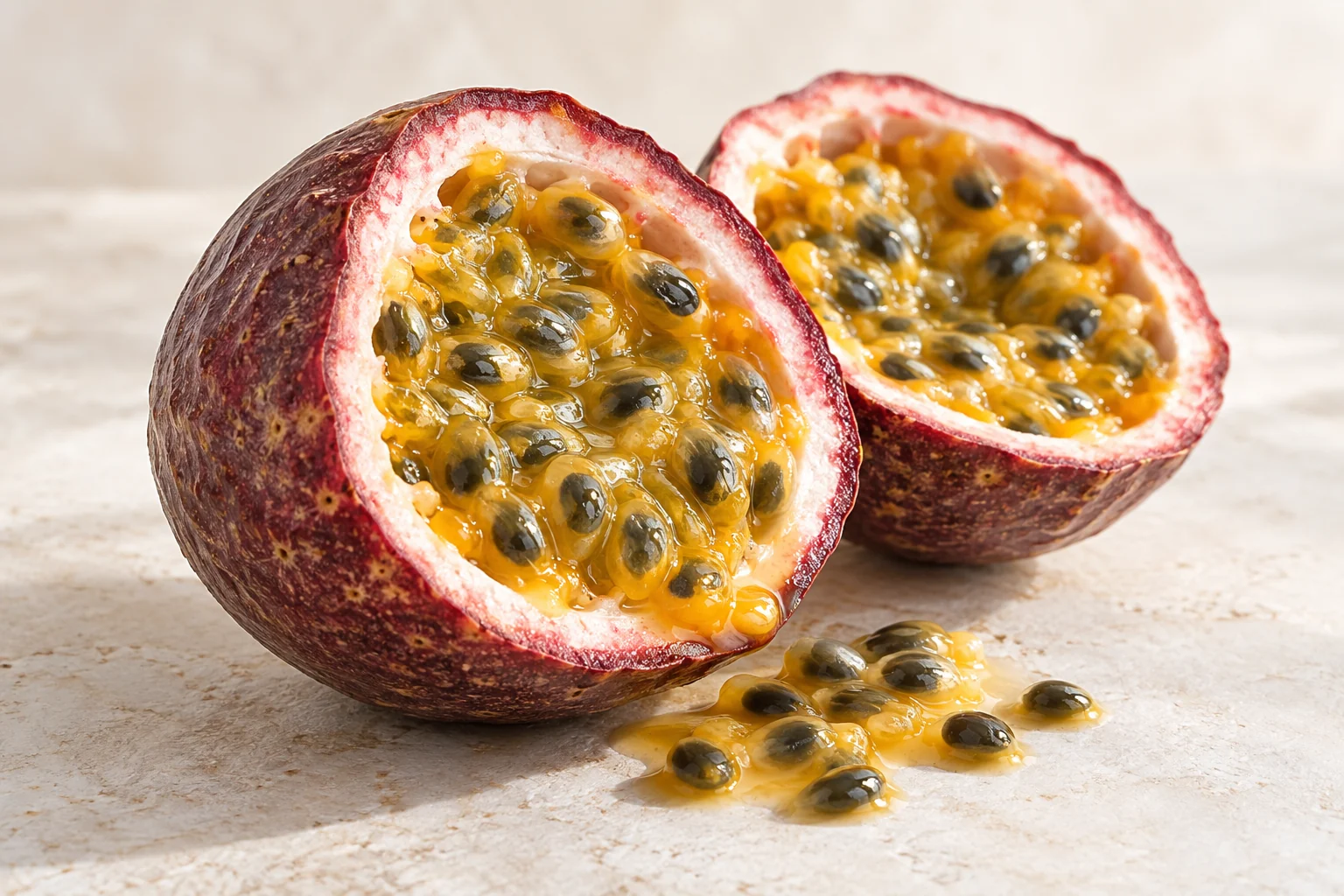
The seed has its own composition
A fruit is not one chemically uniform material. Seeds, pulp and peel can have different compositions, which is why the plant part belongs in an ingredient's identity. In a 2010 laboratory paper, researchers identified piceatannol in passion fruit seeds and investigated seed extracts in cultured skin-related cells. The work reported effects on melanin production and collagen synthesis under those experimental conditions. It explains why the seed became a research focus, but it does not show that eating the fruit or swallowing any seed extract reproduces those effects in human skin.
Further reading
Matsui et al. (2010): seed extract in skin-cell modelsPiceatannol is a particular polyphenol
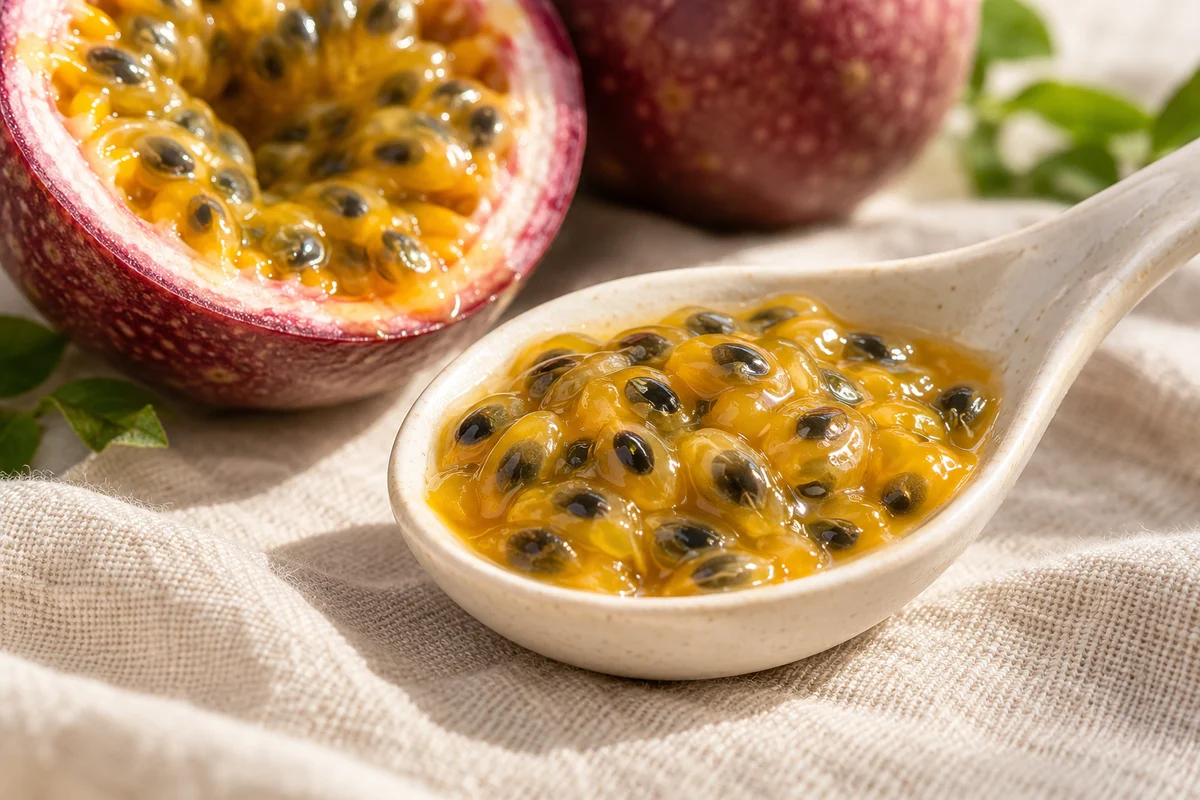
Polyphenol is a broad chemical category, not a single active ingredient. Piceatannol belongs to the stilbene family and is structurally related to resveratrol, but the two names are not interchangeable. In a 2013 cell study, passion fruit seed extract and piceatannol increased glutathione-related measurements in keratinocytes, and the researchers explored responses to UVB exposure. These are useful mechanistic questions about skin-cell redox biology. They are not a sunscreen test, a clinical pigmentation study or evidence that a nutritional product repairs sun damage.
Further reading
Maruki-Uchida et al. (2013): piceatannol in keratinocytesInside the eight-week skin study
The 2018 randomised, double-blind trial included 32 Japanese women aged 35–54 with dry skin. They received a seed extract supplying 5 mg piceatannol daily or a dextrin placebo for eight weeks. Moisture increased from baseline in the active group at four and eight weeks. A stratified analysis of participants with lower initial moisture also favoured the extract over placebo. Water-loss changes were not significant. The distinction between improvement from baseline and superiority to placebo is essential: both groups can change over time, so the comparisons answer different questions.
Why metabolic studies do not become beauty claims
A separate 2017 randomised study examined 20 mg piceatannol per day for eight weeks in 39 people divided by sex and weight category. Selected metabolic findings appeared in a small subgroup of overweight men, rather than consistently across all participants. That design is interesting for generating hypotheses, but it cannot establish a general weight-management effect or a women-specific skin benefit. Keeping this study separate from the skin trial avoids building a broad claim by collecting favourable results from different populations and endpoints. Scientific context is richer when those differences remain visible.

Further reading
Kitada et al. (2017): piceatannol and metabolic measurementsRead extract weight and active content separately
W+NMN Gold contains 80 mg passion fruit seed extract powder per two-capsule serving. This is an ingredient weight, not a declaration of 80 mg piceatannol. A study reporting 5 mg piceatannol identifies a quantified compound within its particular preparation. To compare the two scientifically would require the extract's standardisation and relevant compositional details, not just the plant name. This simple distinction applies across botanical nutrition: an extract can be a meaningful ingredient without every gram being the molecule highlighted in a research paper.
A distinctive botanical, read with precision
The value of this ingredient story is its specificity: a particular plant part, an identifiable polyphenol and studies that ask clearly defined questions. It sits naturally beside Gold's NMN, PQQ and other botanicals without needing a claim of proven synergy. For a reader interested in skin nutrition, the next step is to compare the skin trial's preparation, participants and measurements with other ingredient studies, such as collagen peptides or rice ceramides. That comparison reveals complementary research themes, not evidence that combining every ingredient necessarily produces a larger effect.
Your questions, answered.
Is passion fruit seed extract the same as passion fruit juice?

No. The plant part and preparation differ, so their compositions should not be assumed equivalent.
Does 80 mg extract mean 80 mg piceatannol?
No. Extract weight and the amount of a specific compound are separate quantities.
Explore the sources.
- Ingredient analysis and cell experimentsMatsui et al. (2010): seed extract in skin-cell models
- Cultured-cell experimentMaruki-Uchida et al. (2013): piceatannol in keratinocytes
- Randomised human trialMaruki-Uchida et al. (2018): passion fruit seed and skin moisture
- Small randomised human trialKitada et al. (2017): piceatannol and metabolic measurements