Botanical polyphenols and glycation: reading a four-herb formula
Glycation is a chemical process in which sugars or related reactive compounds modify molecules such as proteins. Botanical extracts are studied for their effects on parts of this process. AG Herb MIX combines Roman chamomile, hawthorn, houttuynia and grape leaves; its research should be read by preparation, dose and measured endpoint.
Four plants, rather than an anonymous blend
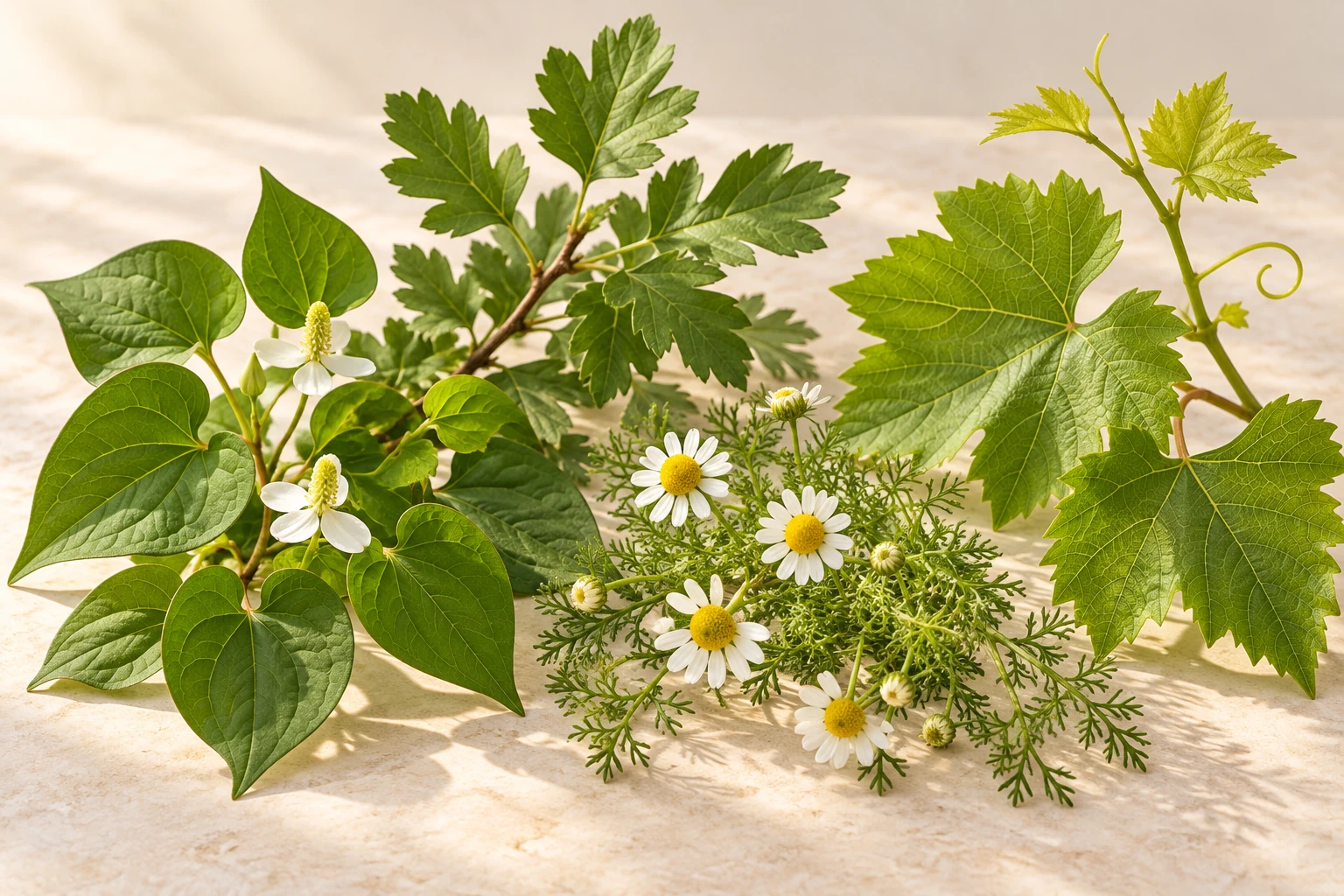
ARKRAY identifies AG Herb MIX as a hot-water extract of Roman chamomile flowerheads, hawthorn berries, the above-ground parts of houttuynia and grape leaves. These are distinct botanical materials, not four names for the same polyphenol. The plant part matters because a leaf, flower and fruit can have different chemical profiles. The manufacturer's description also distinguishes this four-herb material from its later three-herb ingredient. A recognisable blend identity makes research easier to follow, but a commercial name does not itself demonstrate the benefit of every finished product containing it.
Further reading
ARKRAY: four-herb ingredient identityWhat glycation means in skin science
Glycation can generate a diverse family of advanced glycation end products, often abbreviated AGEs. They are not a single molecule that one test captures completely. Researchers may measure particular compounds, fluorescent signals or intermediate reaction products. In skin discussions, interest often centres on long-lived proteins and how chemical modifications could influence their properties. This is different from glycosylation, a regulated biological process that attaches sugars to molecules. It is also different from saying that all dietary carbohydrate damages skin. A biochemical pathway needs context, not a fear-based food rule.
Further reading
ARKRAY Karada Lab: glycation measurement methodsWhy laboratory screening is useful
The four-herb material was developed using experiments that examined different glycation-related reactions. In a laboratory model, researchers can combine a protein with a sugar under controlled conditions and compare reaction products with and without an extract. This helps identify a chemical effect and choose a candidate for further study. It does not reproduce digestion, metabolism or the concentration reaching human skin after swallowing a capsule. Even two tests labelled anti-glycation may measure different products. The most informative question is which reaction changed, under what conditions, and whether a human study subsequently tested a relevant outcome.
Further reading
ARKRAY Karada Lab: glycation measurement methodsA small controlled study, with mixed findings
A 2010 double-blind, placebo-controlled study recruited 26 volunteers with prediabetic glucose measurements; the reported comparison groups contained 13 and 12 people. The intervention supplied 1,200 mg mixed herbal extract daily for eight weeks. Overall fasting glucose, HbA1c and several glycation markers did not show significant changes. A subgroup with higher baseline HbA1c showed a favourable CML result, while some questionnaire measures also favoured the extract. Skin-elasticity observations were limited. The small sample, subgroup analyses and manufacturer-affiliated authors make this exploratory evidence, not a general claim of glycation reversal.

Gold's botanical palette, read ingredient by ingredient
W+NMN Gold lists 120 mg AG Herb MIX, 80 mg passion fruit seed extract and 20 mg pomegranate extract per two capsules, alongside NMN and PQQ. The four-herb amount is therefore not the 1,200 mg intervention used in the study above. Pomegranate is a separate extract, and passion fruit seed has its own piceatannol-focused literature. These ingredients create a layered botanical composition, but their separate research cannot be added together as proof of clinical synergy. A more useful story gives each ingredient its identity and points readers to the question it has actually been studied to answer.
From a promising theme to a useful question
For any botanical claim, look for the plant, plant part, extraction method, quantified compounds and daily serving. Then check whether the research measured a chemical reaction, a blood marker or an observable skin outcome. A short trial in people with altered glucose metabolism cannot automatically describe long-term beauty results in a healthy population. This approach still leaves room for distinctive ingredients and elegant formulation. It simply puts their interest in the right place: a precise composition and an evolving body of research, rather than an unmeasured promise about sugar, skin or ageing.
Your questions, answered.
Is glycation the same as glycosylation?

No. Glycation describes non-enzymatic chemical reactions; glycosylation is a regulated biological process.
Does Gold contain the same herbal dose as the 2010 study?
No. Gold lists 120 mg AG Herb MIX per two capsules; the study used 1,200 mg mixed herbal extract daily.
Explore the sources.
- Original manufacturer informationARKRAY: four-herb ingredient identity
- Original manufacturer research-method descriptionARKRAY Karada Lab: glycation measurement methods
- Small placebo-controlled human studyYonei et al. (2010): mixed herbal extract and glycation markers