From an ingredient study to a complete formula
Ingredient studies explain a defined material in a defined setting. Research on a complete formula tests the preparation as a whole. Read both by matching the ingredient identity, daily amount, participants, duration and outcome to the question you want answered.

Begin with the question you want answered
A useful research question is specific. You might want to understand whether a prepared ingredient changes a skin measurement, how a compound is absorbed, or how a full formula performs in a particular group of people. These questions require different experiments. Naming the question first makes it easier to recognise a relevant paper and easier to set aside an impressive but unrelated result.
A paper becomes more useful when you can identify the material, participants, daily amount and outcome. These details show what was tested and help you judge whether the finding addresses your own question about a product or routine.

Match the material before comparing the result
An ingredient name can describe a broad family. Collagen peptides, for example, can differ in preparation and peptide composition. A plant extract can differ by plant part and constituent profile. A whole mushroom preparation is different from a purified ergothioneine ingredient. These distinctions help determine which paper is most relevant to the material you are reading about.
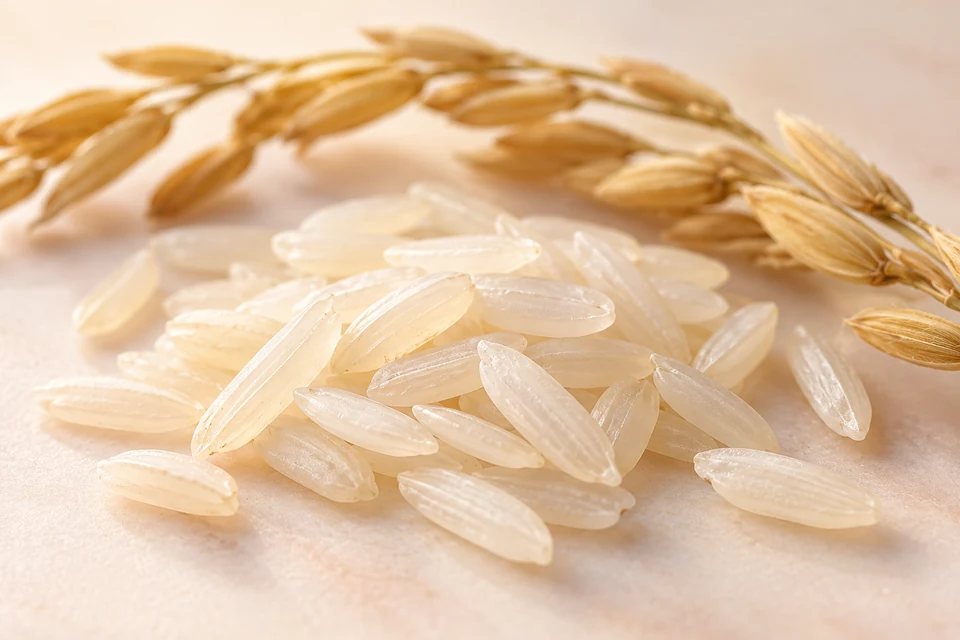
The rice-ceramide study provides a concrete example: the paper names Oryza Ceramide type PCD and describes a daily preparation supplying a stated glucosylceramide amount. That gives the reader a more precise comparison than the word rice alone. The closer the description of the material, the clearer the connection between the label and the research.
Look at the comparison, not just the headline
Randomisation assigns participants to groups using a planned allocation process. A placebo comparison helps researchers judge whether a change differs from what happened in the comparison group. Blinding reduces the influence of expectations. These are features of the study design, and they help you understand why the researchers interpret their results in a particular way.
Then look at the outcome itself. Was it a laboratory concentration, an instrument reading, a questionnaire or an event recorded over time? Each provides a different kind of information. A before-and-after change within one group is worth distinguishing from a difference between groups. Keeping the comparison in view makes even a short summary more informative.

A complete formula introduces another question
A finished formula brings ingredients together in a particular format and set of amounts. Its flavour, capsule, sachet or other delivery features can influence how people use it in practice. A study of that complete preparation can therefore answer questions that an ingredient paper alone was never designed to address.
When a paper tests a combination, preserve that combination in your summary. If three ingredients were used together, the result describes the tested preparation rather than assigning the entire observation to whichever ingredient is most recognisable. The same principle works in the other direction: individual ingredient papers are best introduced as ingredient research, with the exact material and measurement stated.

Use a five-part reading note
A simple reading note can contain five lines: material, amount, participants, duration and result. Add the source link so that you can revisit the paper instead of relying on a screenshot. If a result depends on a subgroup or an adjusted analysis, record that detail next to the result. Short notes are more useful when they preserve the condition that gave the finding its meaning.
For ACMETEA, this is the bridge between a product page and a journal article. The product page tells you what the formula contains and how the collection is organised. The article gives an ingredient room to be explained. Moving between the two lets you keep the practical product details and the scientific context in view without making either page unreadable.

Your questions, answered.
Why does the study population matter?

Participants bring a particular age range, health context and baseline condition. A result from people with dry skin, for example, is most directly informative about that study setting. Keep that context with the result when comparing it with your own question.
Is a supplier-funded paper useful?
It can be useful. Read the methods, results and funding declaration together, and look for other research on the same question. Funding is part of the context, alongside study design and how completely the results are reported.
What should a good ingredient summary include?
A recognisable ingredient identity, a clear explanation of the study, the measured outcome and a source link. It should make the research understandable without changing the question the researchers actually tested.
Explore the sources.
- Randomized human trial · Functional Foods in Health and DiseaseTakara et al. (2021) — Rice-derived glucosylceramides and facial water loss