Green tea extract and EGCG: composition, skin research and sensible use
EGCG is one catechin found in green tea. Green tea extract can contain several catechins and other constituents, so the extract's total weight is not its EGCG content. Human research explores absorption and skin responses, while concentrated extracts require their own safety assessment.
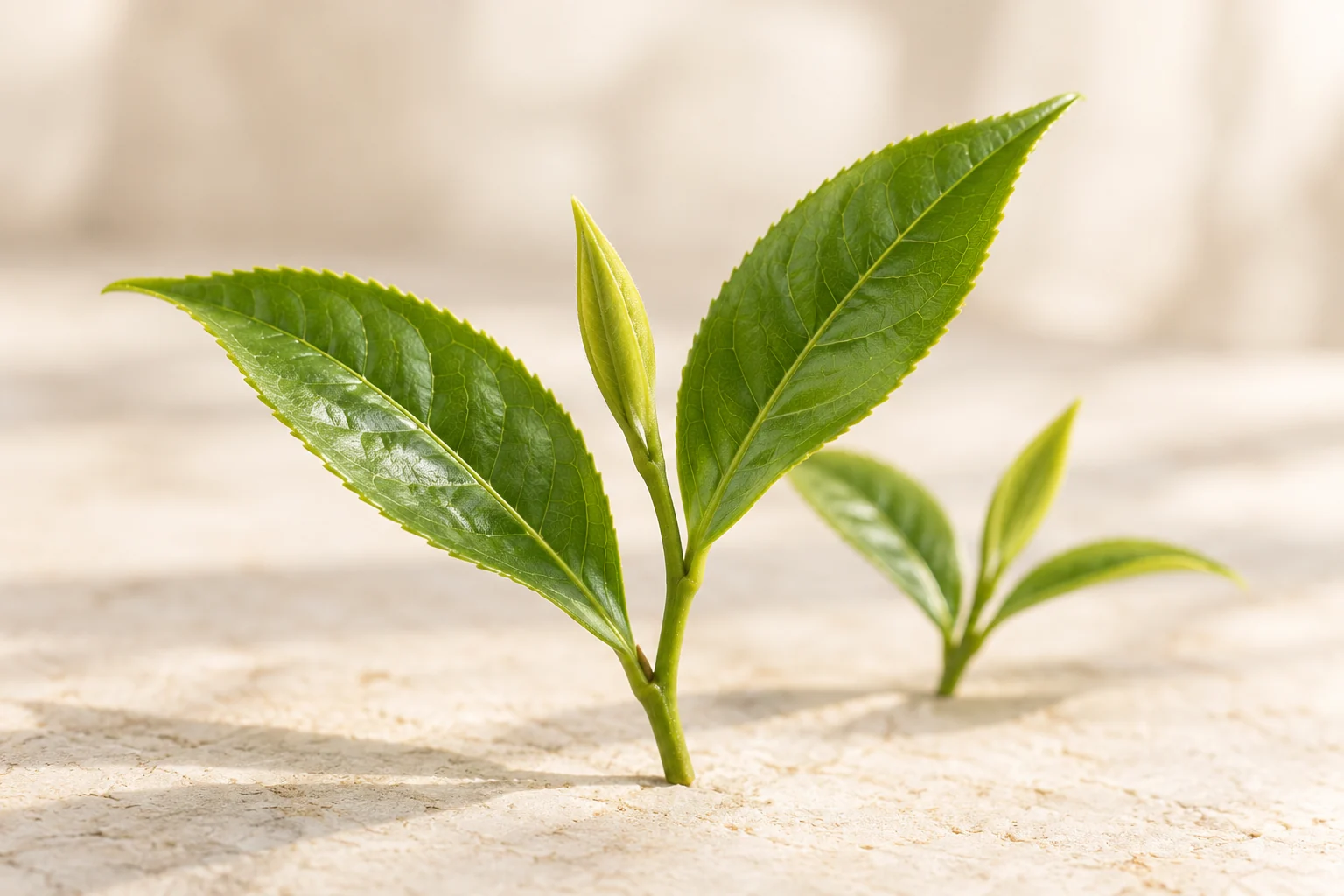
From a leaf to a defined preparation
Green tea begins with leaves of Camellia sinensis, but a brewed drink and a concentrated extract are different preparations. Catechins are one group of its polyphenols; EGCG is short for epigallocatechin gallate. An extract may be described by its total weight, total catechin content or a specific EGCG amount. Those descriptions are not interchangeable. Extraction, concentration and added carriers influence the final composition. Reading the exact label is therefore more useful than treating every tea-based ingredient as the chemical equivalent of a familiar cup of tea.
Further reading
EFSA (2018): safety assessment of green tea catechinsThe body encounters metabolites, too
After ingestion, plant compounds can be transformed before they reach tissues. A human study published in 2016 examined green-tea catechins and their metabolites in skin samples and blister fluid before and after ultraviolet exposure. It detected several tea-derived compounds, providing evidence about distribution rather than proving a visible benefit. This is an important step in nutrition research: investigators first need to know what reaches a tissue and in what form. Finding a metabolite in skin is not the same as demonstrating improved hydration, fewer wrinkles or protection from sunlight.
Further reading
Clarke et al. (2016): tea metabolites in human skinA controlled UV-response trial found no clear benefit
A 2015 double-blind trial assigned 50 healthy adults to green tea catechins with vitamin C or placebo for three months. The daily intervention supplied 1,080 mg catechins, a substantial research dose. After a controlled ultraviolet challenge, the investigators found no significant between-group benefit for redness, immune-cell infiltration or the measured inflammatory mediators. This result deserves the same visibility as positive laboratory findings. It also explains why oral green tea ingredients should not be presented as an alternative to sunscreen, protective clothing or appropriate sun-exposure habits.
Further reading
Farrar et al. (2015): catechins and UV-response measurementsConcentration changes the safety question
The European Food Safety Authority's 2018 assessment distinguished traditional tea infusions from supplements supplying concentrated catechins. It identified liver-enzyme concerns in intervention studies at 800 mg EGCG per day or above and could not establish a generally safe supplement dose from the available evidence. This is not a suggestion to aim just below that number. Individual susceptibility and preparation matter. People with liver conditions, those taking medicines and anyone considering several tea-extract products should seek professional advice rather than adding together doses without review.

Further reading
EFSA (2018): safety assessment of green tea catechinsHow to read Platinum's 90 mg
W+NMN Platinum contains 90 mg green tea extract per two-capsule serving. That amount describes the extract, which contains EGCG; it does not declare 90 mg isolated EGCG. The formula also includes NMN, Japanese Shirayuki mushroom powder, PQQ and a shell-derived calcium ingredient. Each has a separate composition story. A women's positioning describes the edition's brand perspective, not evidence that tea catechins act only in women. The useful comparison is between named ingredients and their quantities, with human research kept at the level of the preparation actually studied.
A concise reading checklist
Before comparing green tea products, identify whether the number refers to extract, total catechins or EGCG. Then check the serving size, whether caffeine is quantified, and what other supplements you already take. Do not assume that a product is caffeine-free because EGCG is the headline ingredient. For research, separate absorption, laboratory antioxidant activity and clinical endpoints. These questions make the ingredient more understandable without requiring a dramatic promise. For use, follow the product directions and obtain individual advice during pregnancy, breastfeeding, medical treatment or any unexplained symptoms.
Your questions, answered.
Is 90 mg green tea extract the same as 90 mg EGCG?

No. EGCG is one constituent within an extract; its amount must be quantified separately.
Can oral tea catechins replace sun protection?
No. The controlled UV-response trial described here did not show significant protection.
Explore the sources.
- Official scientific safety assessmentEFSA (2018): safety assessment of green tea catechins
- Human tissue-distribution studyClarke et al. (2016): tea metabolites in human skin
- Randomised human trialFarrar et al. (2015): catechins and UV-response measurements