Rice ceramides and the science of skin moisture
Rice-derived ceramide ingredients supply plant sphingolipids, including glucosylceramides. Researchers study these preparations for their relationship with skin moisture and barrier function. The amount of an extract and the amount of glucosylceramides within it are two different numbers.
Begin with the moisture barrier
When skin feels dry, the first instinct is often to add moisture at the surface. That is only one part of the story. The outer skin layer also needs to retain water effectively. Barrier lipids, including ceramides, help give this surface its structure. This makes the barrier a useful subject for both topical skincare and nutrition research, even though those approaches reach it by different routes.
For an ingredient-focused beauty routine, distinguish three questions: how much water is present in the skin, how much water is escaping, and how the skin feels. They are connected, but a measurement of one does not automatically describe the others. That distinction keeps a promising ingredient story specific and easy to understand.

From a familiar grain to a specific ingredient
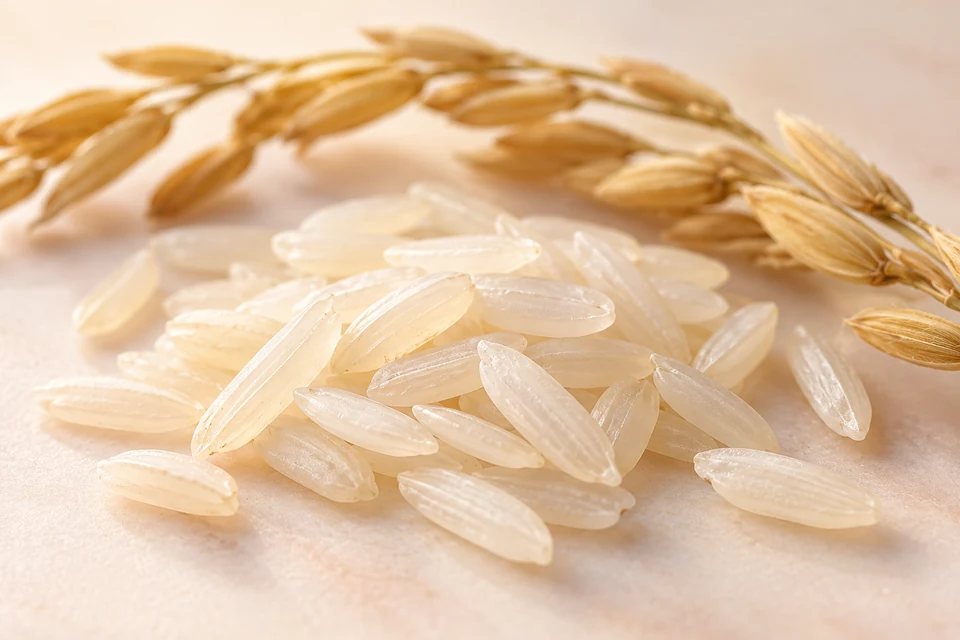
Rice is the agricultural source; a rice-derived ceramide ingredient is a prepared material with a defined composition. Glucosylceramides are one of the constituents discussed in this research. An extract may contain additional compounds and carriers, so the number printed beside the extract name should not be read as the quantity of pure ceramide.
To understand a rice-derived ingredient, look beyond the familiar grain to the preparation itself: its name, the relevant constituent and the amount supplied by a daily serving. Those details connect the ingredient in a formula with the specific material examined in a scientific paper.
What a rice-ceramide trial found
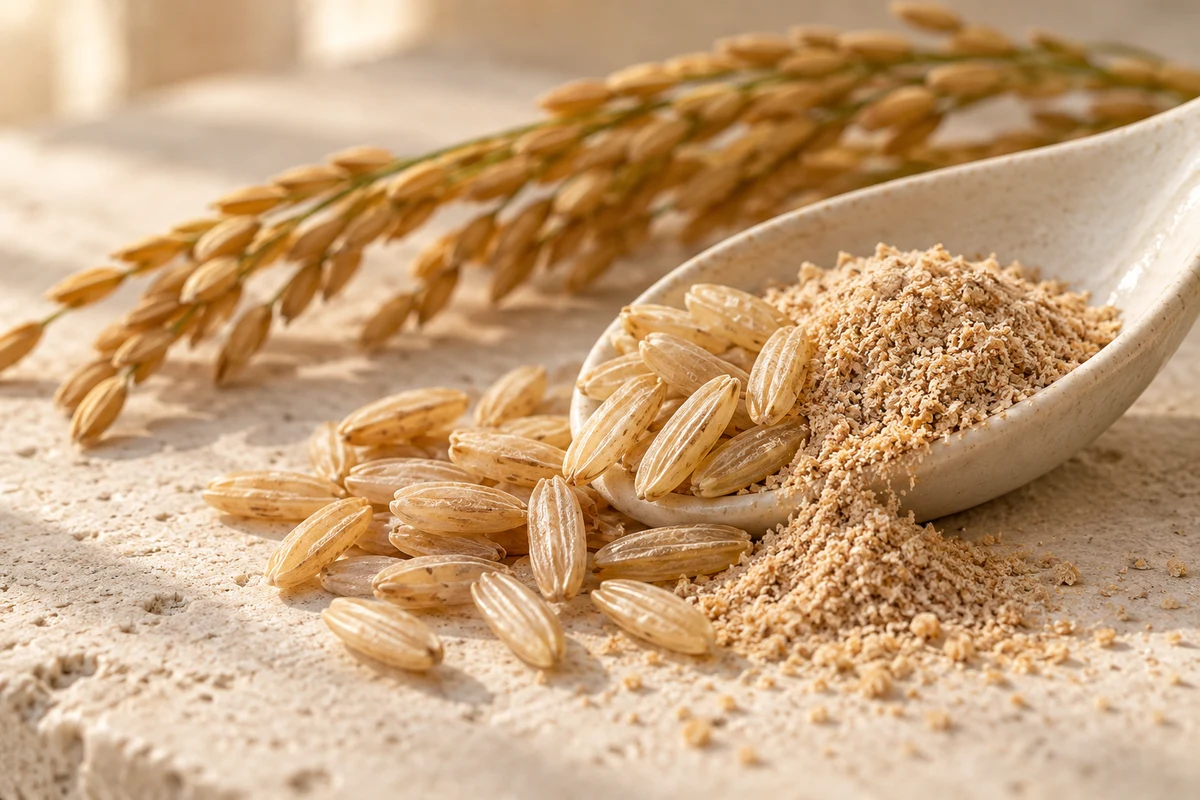
Takara and colleagues studied 44 Japanese women with dry skin in a 12-week randomized, placebo-controlled trial. The preparation was Oryza Ceramide type PCD at 40 mg daily, supplying 1.2 mg of glucosylceramides. Cheek transepidermal water loss was lower in the active group at weeks four and twelve. The study also reported selected secondary findings for lip moisture and visible pores.
The ingredient supplier supported the research, and the participants were a specific group of women. Those details help place the results in context. The paper is most useful for understanding that particular rice-derived preparation and those measured outcomes, rather than treating every rice extract as interchangeable.

Hydration and water loss tell different stories
Transepidermal water loss, often shortened to TEWL, estimates water moving from the body through the skin to the surrounding air. A hydration measurement instead looks at water content in the outer layer. Climate, measurement location and timing can influence skin assessments, so a well-described study records these conditions rather than relying only on a before-and-after photograph.
When you read a result, ask where the measurement was taken and when. A cheek result belongs to the cheek assessment; a result at twelve weeks belongs to that duration. This approach makes the evidence more memorable. Instead of keeping an impressive percentage with no context, you keep the ingredient, the people and the actual observation together.
A moisture-focused daily ritual
A practical skin ritual can combine gentle cleansing, an appropriate moisturiser and sun protection with regular, varied meals. Within ACMETEA, the rice-derived ceramide ingredient is part of the DermaShield formula story. It sits alongside collagen peptides because skin structure and moisture are complementary areas of interest, not competing descriptions of the same ingredient.
Use the product's daily directions and keep the complete ingredient list in view. If you are also taking a separate beauty supplement, compare the two lists before combining them. For persistent discomfort, a changing rash or an active skin condition, a direct assessment is more useful than repeatedly adding products to a routine.

Your questions, answered.
Does 40 mg of rice extract mean 40 mg of ceramides?

No. In the cited trial, 40 mg of the prepared ingredient supplied 1.2 mg of glucosylceramides. The extract weight and its constituent amount describe different things and should be read separately.
Is an oral ceramide ingredient the same as a ceramide cream?
They are different formats with different routes of use. A topical study describes a skincare preparation applied to the skin; an oral study describes an ingested preparation. Compare each with research on its own format.
Where does rice fit in the ACMETEA collection?
The DermaShield page explains the rice-derived ceramide ingredient within its principal formula. The collagen guide offers a complementary introduction to the protein side of skin nutrition.
Explore the sources.
- Randomized human trial · Functional Foods in Health and DiseaseTakara et al. (2021) — Rice-derived glucosylceramides and facial water loss