Iron and folate through women's life stages
Iron and folate have different nutritional jobs: iron is part of haemoglobin, which carries oxygen, while folate participates in normal cell division. Menstrual losses, childbirth and pregnancy planning can change the questions worth asking, but individual assessment and the complete formula should guide supplement choices.
Two essential roles, not one interchangeable benefit
Iron is a mineral used in haemoglobin and other proteins. Folate is vitamin B9 and participates in reactions needed to make DNA and RNA. Discussing them together makes sense in women's nutrition, but taking one does not correct every problem associated with the other. Tiredness alone does not identify a deficiency.
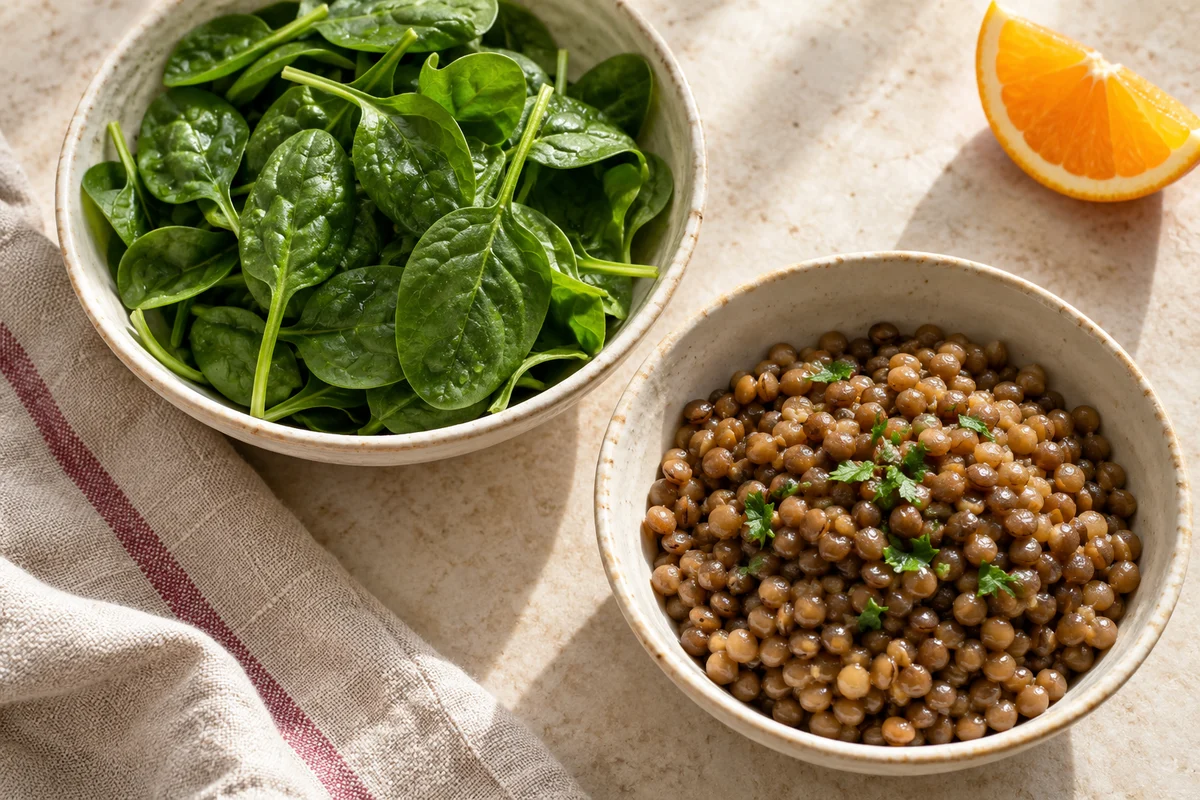
Food remains part of the picture. Iron can come from meat, seafood, pulses and fortified foods; folate occurs in foods such as leafy vegetables and beans. A useful review asks what a person's usual diet provides and whether blood loss, restricted intake or a diagnosed condition changes the next step.
During menstrual life: look beyond the symptom
Menstrual blood loss is one reason iron needs vary. A 2012 trial enrolled 198 menstruating women with fatigue, ferritin below 50 micrograms/L and haemoglobin above 12 g/dL. Participants received 80 mg of elemental iron daily as ferrous sulphate or placebo for 12 weeks. Fatigue improved more in the iron group; quality-of-life, depression and anxiety measures did not differ significantly.
That is evidence in a selected group with low stores, using a defined iron preparation. It is not a recommendation that everyone who menstruates take 80 mg of iron. The trial was industry funded. Heavy bleeding or persistent fatigue deserves assessment of its cause, rather than a product being used to manage the symptom indefinitely.

After childbirth: use the individual care plan
Birth-related blood loss and existing iron stores make postnatal nutrition personal. WHO guidance discusses oral iron, with or without folic acid, for 6–12 weeks after delivery in settings where gestational anaemia is a public-health concern. That public-health context is part of the recommendation, not an optional footnote.
For an individual, the care team can decide whether testing, food changes or a particular treatment is needed. Breastfeeding also changes the suitability conversation: an ingredient with an established nutritional role does not by itself establish the safety of a multi-ingredient product. Take the whole label to the discussion, including products already used before pregnancy.
Further reading
WHO: postpartum iron supplementationBefore pregnancy: keep folic-acid guidance distinct
The US CDC advises 400 micrograms of folic acid daily for women who could become pregnant. The timing matters because neural-tube development begins early, often before pregnancy is recognised. This is specific public-health advice about folic acid and neural-tube-defect prevention, not evidence of improved fertility or a recommendation for an arbitrary blend.
Follow local prenatal advice and any individual instructions from your clinician. DHEAAMH and the PWRH collection contain snow lotus culture and must not be used during pregnancy. Preconception use requires a review of the entire formula, including vitamin A; the presence of folic acid does not make the product a prenatal substitute.

Further reading
CDC: folic acid before and during early pregnancyRead the units before comparing two products
Elemental iron is the quantity of iron itself. The weight of a haemoglobin-derived ingredient or iron salt includes other material, so it is not the same number. Likewise, folic acid and dietary folate equivalents are different ways of expressing vitamin B9 intake. Match both the nutrient and the measurement basis before making a comparison.
An appointment checklist can be simple: bring the labels, the daily amounts you actually use, your medicines and the questions prompted by your life stage. Mention changes in bleeding, recent delivery or an upcoming procedure. In the PWRH collection, iron and folate provide a clear nutritional thread; the most useful routine is the one that fits your assessed needs.

Your questions, answered.
Does an iron-containing ingredient's weight equal its iron content?

No. Compare elemental iron per stated serving, not the total weight of an iron-containing ingredient. A research dose should not be used to calculate a product dose.
Does everyone with fatigue need iron?
No. Fatigue has multiple possible causes. A clinician can assess symptoms, diet and appropriate blood tests before recommending additional iron.
Can a formula containing folic acid replace prenatal care?
No. Follow specific folic-acid and prenatal guidance. The PWRH collection must not be used during pregnancy and requires professional review before preconception or breastfeeding use.
Explore the sources.
- Official nutrient referenceNIH Office of Dietary Supplements: iron
- Official nutrient referenceNIH Office of Dietary Supplements: folate
- Randomised human nutrient trialVaucher et al. (2012): iron and fatigue in women with low iron stores
- Official clinical nutrition guidanceWHO: postpartum iron supplementation
- Official nutrient guidanceCDC: folic acid before and during early pregnancy