Calcium and protein at midlife: a whole-routine perspective
Calcium and protein belong in a midlife nutrition review for different reasons: calcium is a major bone mineral, while protein intake is relevant to muscle and broader tissue nutrition. Consider food, movement and personal health together. A calcium-containing ingredient or peptide blend is not equivalent to every preparation tested in a clinical trial.
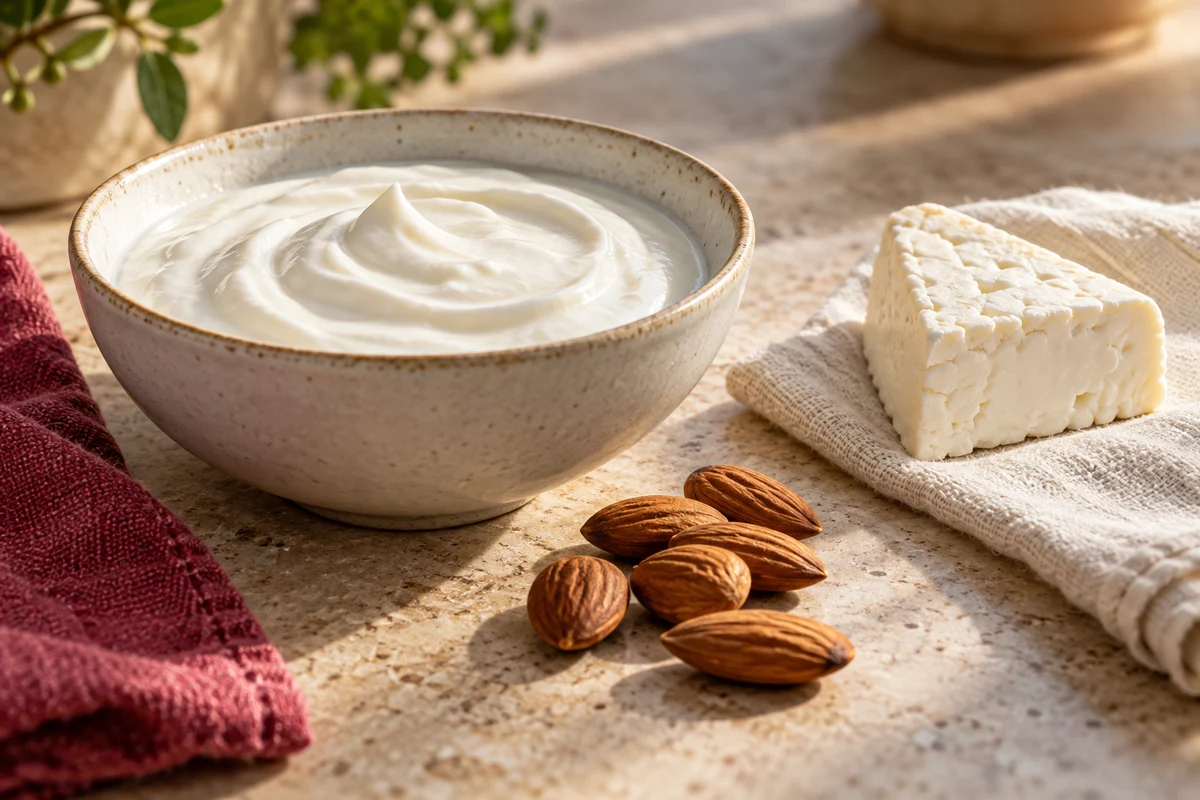
Begin with what the usual week provides
Midlife can be a useful time to reassess ordinary meals rather than build an elaborate new routine. Which meals contain a protein food? Which include a calcium source? Do practical barriers, dietary restrictions or changing appetite make some meals difficult? A short food record gives a nutrition appointment something concrete to work with.
Calcium-rich choices include dairy foods and appropriately fortified alternatives; the amount in a fortified product depends on its label. Protein can come from a range of animal or plant foods. The objective is not to make every meal identical, but to notice recurring gaps before adding several overlapping supplements.
Further reading
NIH Office of Dietary Supplements: calciumCalcium L-lactate is a form, not an elemental amount
Calcium L-lactate identifies a calcium-containing compound. Its ingredient weight includes more than calcium, so 500 mg of that compound would not mean 500 mg of elemental calcium. A useful comparison needs the elemental amount per stated serving, alongside calcium already supplied by food and other products.
US NIH reference values give 1,000 mg of calcium daily for women aged 19–50 and 1,200 mg for women aged 51–70, counting total intake. These are population reference values, not instructions to obtain the whole amount from a supplement. Personal advice can differ with health status, diet and location.

Further reading
NIH Office of Dietary Supplements: calciumBone density and fractures are different outcomes
The Women's Health Initiative randomised 36,282 postmenopausal women aged 50–79 to 1,000 mg of elemental calcium as calcium carbonate plus 400 IU of vitamin D3 daily, or placebo. Over an average of seven years, hip bone density was modestly higher with supplementation. Hip fractures were not significantly reduced in the primary intention-to-treat analysis, and kidney stones increased.
The balanced reading includes all three findings. A change in a bone-density measurement is not automatically proof of fewer fractures, and a trial of calcium with vitamin D cannot be described as a trial of calcium alone. CSEWHO's calcium L-lactate and peptide ingredients are a different formulation, so this study is context for understanding bone nutrition rather than a product-result claim.
Further reading
Jackson et al. (2006): calcium plus vitamin D and fracturesProtein studies often include an exercise programme
In a 2018 randomised study, 31 older women already accustomed to resistance training received 35 g of a whey-protein preparation or placebo during a 12-week programme with three training sessions per week. Both groups improved muscle mass and strength; the whey group had larger increases in these measures. A later correction disclosed one author's advisory role with a sports-supplement manufacturer.
That matters when reading a headline about protein. The women were not simply taking an ingredient while leaving every other habit unchanged. Whey is also not interchangeable with collagen peptides or a small quantity of a bioactive milk hydrolysate. The practical lesson is to consider the protein source, total diet and activity programme together, not to borrow the trial's dose for a different product.

Make room for an individual review
Bring existing supplements and medicines into the same conversation, especially if you already use calcium or take thyroid medication. A pharmacist or clinician can help check combined intake and timing. A history of kidney stones, kidney disease or prescribed bone treatment makes personalised advice particularly useful.
CSEWHO offers a midlife perspective within the PWRH collection, connecting calcium L-lactate with protein ingredients, milk-peptide research and skin nutrition. The collection's safety instructions still apply: it contains snow lotus culture and must not be used during pregnancy. Nutrition can be one part of a well-considered midlife routine, alongside movement and care for symptoms that affect daily life.

Further reading
NIH Office of Dietary Supplements: calciumYour questions, answered.
Should all my calcium come from supplements?

No. Reference intakes count food and supplements together. Review your usual calcium sources before deciding whether an additional product is useful.
Can collagen replace every other protein source?
Different protein ingredients have different amino-acid profiles and research purposes. Collagen-peptide skin studies and whey-with-exercise trials should not be treated as interchangeable.
Does this nutrition approach replace menopause or osteoporosis treatment?
No. Food, activity and supplements should fit alongside the care recommended for your individual health needs, not replace prescribed treatment.
Explore the sources.
- Official nutrient referenceNIH Office of Dietary Supplements: calcium
- Randomised nutrient-combination trialJackson et al. (2006): calcium plus vitamin D and fractures
- Randomised nutrition-and-exercise trialSugihara Junior et al. (2018): whey protein with resistance training
- Published study correction2020 correction: protein-trial conflict-of-interest disclosure