Bird's nest and sialic acid: a closer look at glycoproteins
Edible bird's nest contains proteins and sugar-containing structures, including sialic acid. It is not the same material as collagen or isolated sialic acid. Laboratory composition studies and human trials answer different questions, so the preparation, processing and measured outcome are central to understanding its nutritional interest.
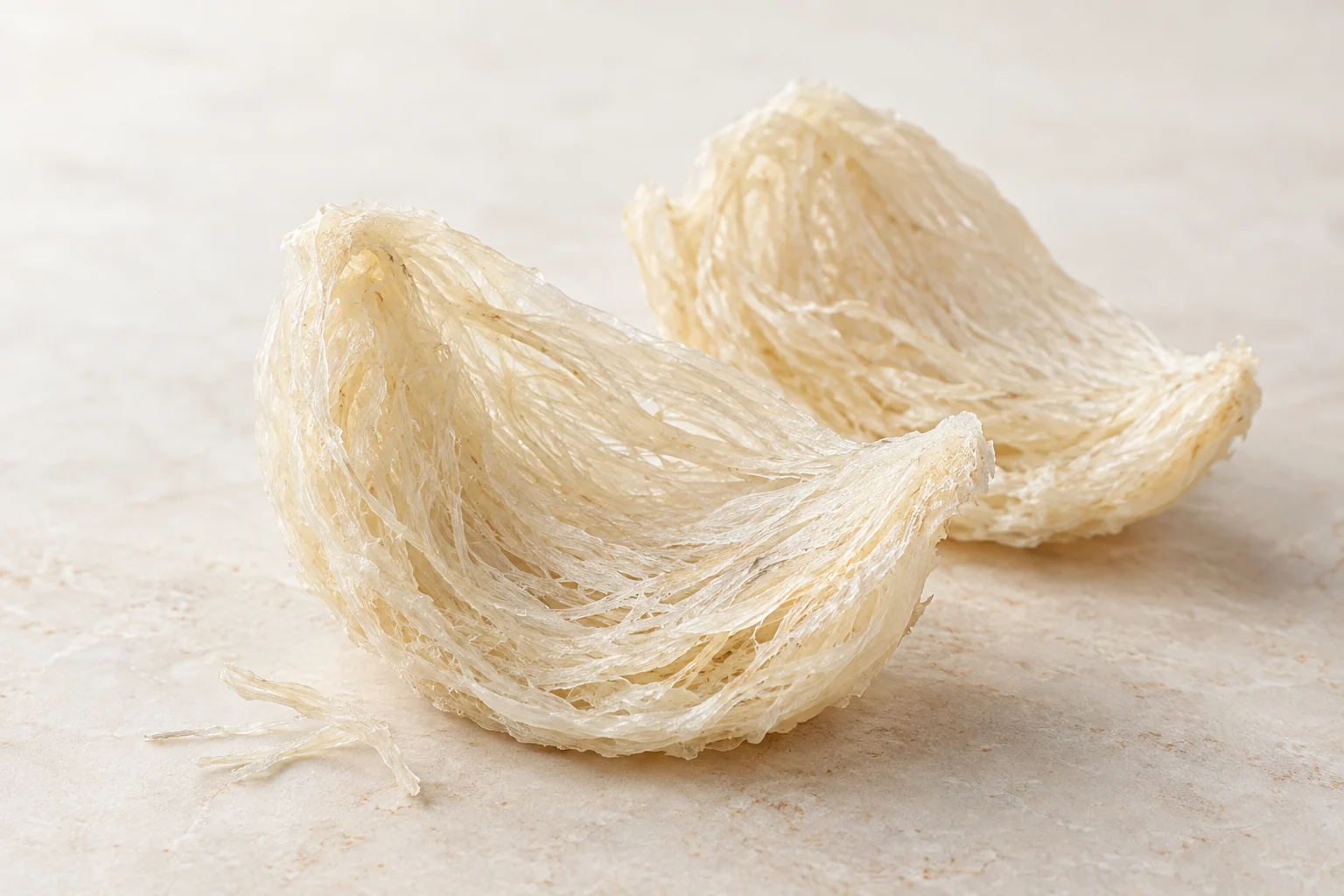
What makes bird's nest a different ingredient?
Edible bird's nest is formed from the salivary material of certain swiftlets. Glycoproteins are part of its composition: proteins with sugar chains attached. Sialic acids can occur at the ends of those chains. This makes the ingredient chemically different from a powder discussed only for its total protein content.
A 2021 laboratory study examined bird's-nest materials and the influence of extraction on their protein profiles and sialic-acid measurements. It did not involve people taking a supplement. Its contribution is compositional: it helps explain what researchers are measuring and why the material and extraction method affect the result.
Sialic acid is a component, not a synonym
When a product lists bird's-nest powder, that describes a complex ingredient. When an analysis reports sialic acid, it describes a component measured within a sample. An isolated sialic-acid ingredient is a third proposition. Moving between those names without noticing the difference can turn an interesting scientific fact into an inaccurate comparison.
The practical question is what is being weighed. A milligram amount might refer to raw nest, a dried extract, a blend with a carrier, or an isolated compound. A percentage is only meaningful when its denominator is clear. None of these quantities can be substituted for another merely because the words bird's nest and sialic acid appear together.
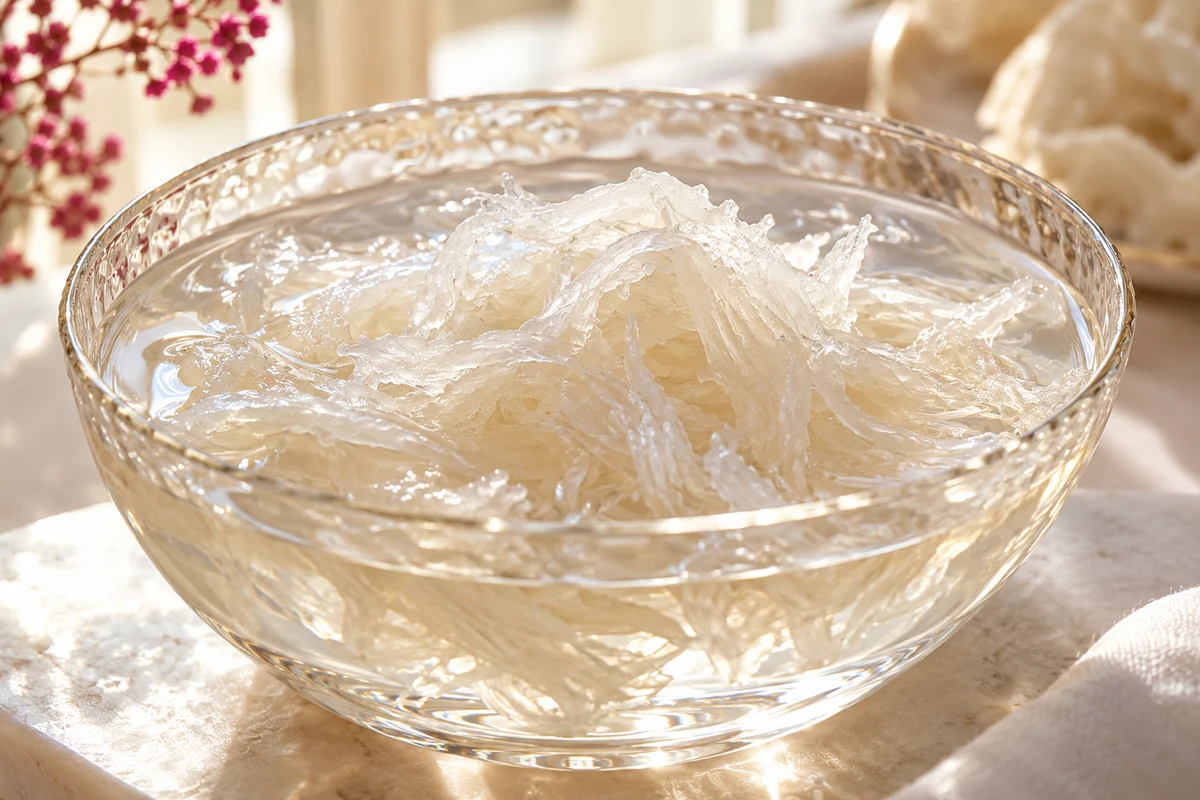
A human skin study, read with its preparation
A 2022 trial randomised 86 women aged 40–60 to a bird's-nest preparation or placebo for 12 weeks. The reported daily amount was 100 mg of a preparation comparable to Oryza's EBN extract-PK, containing 20% hydrolysed swiftlet-nest extract: 20 mg of that extract within the preparation. It was not 100 mg of pure sialic acid.
The authors reported favourable between-group changes in wrinkle measurements. Their results and conclusion did not establish significant benefits for moisture or elasticity; the abstract and body describe elasticity inconsistently. This was a single-centre study with industry funding. These details support a narrow discussion of that preparation and those outcomes, not a claim that PWRH has the same effects.
Why a laboratory result needs its method
An analytical study published in 2023 developed a method for evaluating bird's-nest content in ready-to-eat beverages. The researchers examined a way to measure sialic acid within a food matrix. This kind of work is useful because a beverage or a blended powder can contain many ingredients besides the material being measured.
For a reader, the important distinction is between identifying a marker and proving a health outcome. A method may help characterise composition or estimate an ingredient contribution; it does not show that consuming the food changes skin, recovery or reproductive health. Ask what the assay was designed to establish before treating a laboratory figure as an efficacy score.

How to place bird's nest in a broader formula
In PWRH, bird's nest sits alongside collagen peptides, NAG, Lactium® and micronutrients. Each introduces a different question: protein fragments and skin measurements, sugar components of structural molecules, milk-peptide research, or essential nutrient physiology. The value of explaining them individually is that the formula becomes understandable without inventing a single all-purpose mechanism.
A useful product comparison therefore begins with ingredient identity and serving information, then asks whether a cited study actually matches. Tradition, an attractive ingredient story and a scientific paper can all be interesting, but they are different forms of information. Keep them distinct when deciding what deserves a place in your routine.
Your questions, answered.
Is bird's-nest powder a pure sialic-acid supplement?

No. Bird's nest is a complex material containing proteins and carbohydrates. A sialic-acid measurement describes one component, not the whole ingredient.
Does the skin trial establish a PWRH result?
No. It tested a particular processed preparation in women aged 40–60 for 12 weeks. The study does not establish the effects of the PWRH blend or a postnatal benefit.
Does traditional use establish pregnancy suitability?
No. Suitability depends on the complete product. The PWRH collection contains snow lotus culture and must not be used during pregnancy; breastfeeding use needs professional review.
Explore the sources.
- Laboratory ingredient characterisationMohamad Nasir et al. (2021): bird's-nest composition and extraction
- Randomised human ingredient trialKim et al. (2022): a specific bird's-nest extract and skin wrinkles
- Analytical method studyPoon and Sze (2023): evaluating bird's-nest content in beverages